que cherchez-vous?
Un tuyau d'échappement chaud peut engendrer un problème thermique bien plus important que son diamètre ne le laisse supposer.
Dans un véhicule, un compartiment de générateur, une salle des machines marines ou une machine industrielle, le tuyau d'échappement peut se trouver à quelques centimètres seulement des câbles électriques, des flexibles hydrauliques, des conduites de carburant, des panneaux de carrosserie, des capteurs ou des zones de maintenance. Une fois le système d'échappement à température de fonctionnement, ce faible dégagement peut devenir un point critique dans la conception thermique globale.
C'est ici queIsolation du tuyau d'échappementdevient nécessaire.
Un système d'isolation performant ne se contente pas de recouvrir un tuyau chaud. Il doit maîtriser la chaleur tout en résistant aux vibrations, aux cycles thermiques répétés, à la contamination, aux mouvements et à la maintenance.
C’est pourquoi choisir l’isolation uniquement en fonction de sa température de fonctionnement est rarement suffisant.
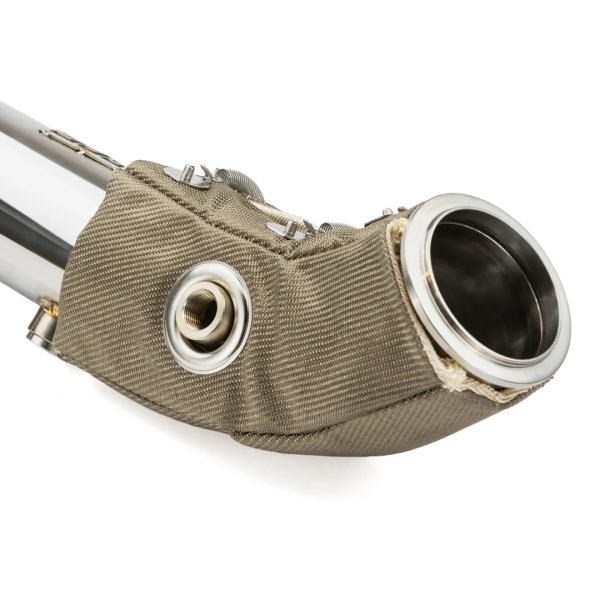
BSTFLEX développeIsolation du bouclier thermique d'échappementpour les systèmes d'échappement automobiles, diesel, marins, de générateurs et industriels, y compris les couvertures de tuyaux amovibles, les isolants, les bandes thermiques, les manchons flexibles et les barrières thermiques métalliques.
Avant de choisir un matériau isolant, déterminez quel problème doit être résolu.
Un tuyau d'échappement peut nécessiter une isolation pour les raisons suivantes :
Un faisceau de câbles situé à proximité surchauffe ;
la température de l'enceinte est trop élevée ;
Les opérateurs sont exposés à des surfaces chaudes ;
la chaleur atteint une conduite de carburant ou hydraulique ;
Le plancher d'un véhicule reçoit une chaleur rayonnante excessive ;
La salle des machines est insuffisamment ventilée ;
Le tuyau d'échappement doit retenir davantage de chaleur en aval ;
Les équipements environnants ne supportent pas la température actuelle.
Ce sont des problèmes différents.
Ils peuvent nécessiter des systèmes d'isolation différents même lorsque la température du tuyau d'échappement est identique.
Par exemple, protéger le plancher d'un véhicule de la chaleur rayonnante peut nécessiter un écran réfléchissant, tandis que réduire la température de surface externe d'un tuyau d'échappement de générateur peut exiger une épaisse couverture isolante amovible.
L'isolation des tuyaux d'échappement se divise généralement en quatre catégories pratiques.
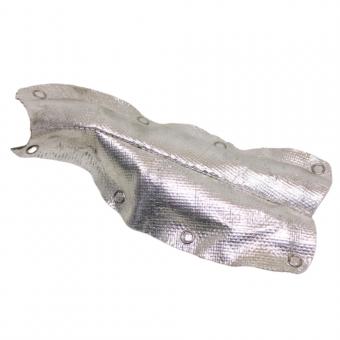
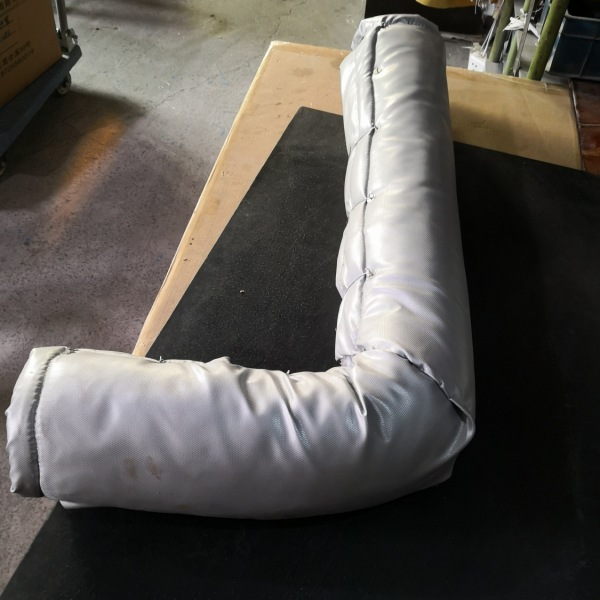
Une couverture amovible est fabriquée sur mesure pour s'adapter à un diamètre de tuyau ou à une géométrie d'échappement spécifique.
Il contient normalement :
une couche interne résistante à la chaleur ;
isolation thermique ;
une couche protectrice externe ;
fixation mécanique.
Cette construction est particulièrement adaptée lorsque l'accès pour la maintenance est important.
Les installations typiques comprennent :
générateurs diesel ;
moteurs marins;
moteurs industriels ;
gros tuyaux d'échappement ;
silencieux ;
Coudes d'échappement.
La couverture peut être fabriquée en plusieurs sections plutôt qu'en une seule longue pièce, ce qui permet aux techniciens de ne retirer que la section nécessaire à l'inspection.
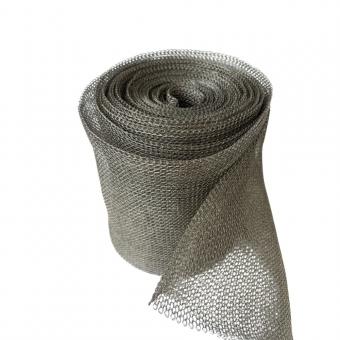
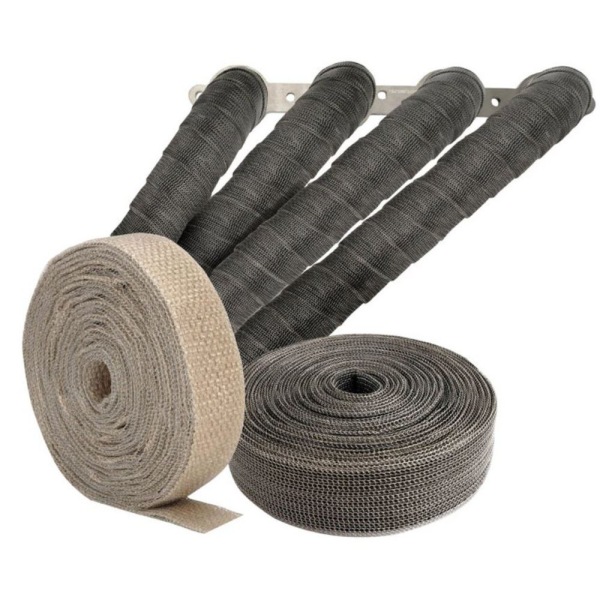
La bande thermique pour échappement est fournie en rouleaux et enroulée en spirale autour du tuyau.
Il est largement utilisé pour :
collecteurs d'échappement automobiles ;
motos;
systèmes d'échappement performants ;
tubes d'échappement de petit diamètre ;
Fabrication de systèmes d'échappement sur mesure.
Fournitures BSTFLEXBande thermique pour échappement et collecteurdans différentes constructions de fibres haute température.
L'isolation par bande thermique offre une solution simple pour isoler les longues surfaces tubulaires, mais elle est moins pratique lorsque le système d'échappement doit être ouvert régulièrement pour l'entretien.
Certaines conduites d'échappement nécessitent une solution de type manchon plutôt qu'une couverture fabriquée sur mesure.
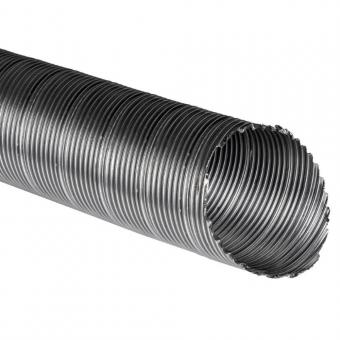
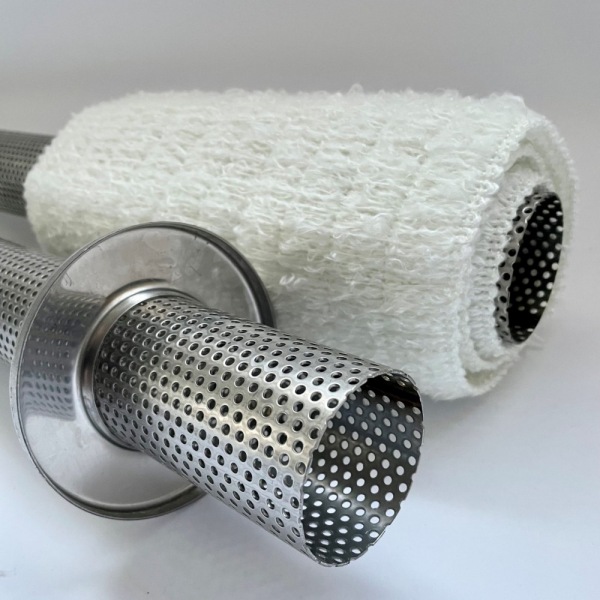
Un isolant flexible peut être installé sur les tuyaux d'échappement de petit diamètre et de géométrie relativement simple.
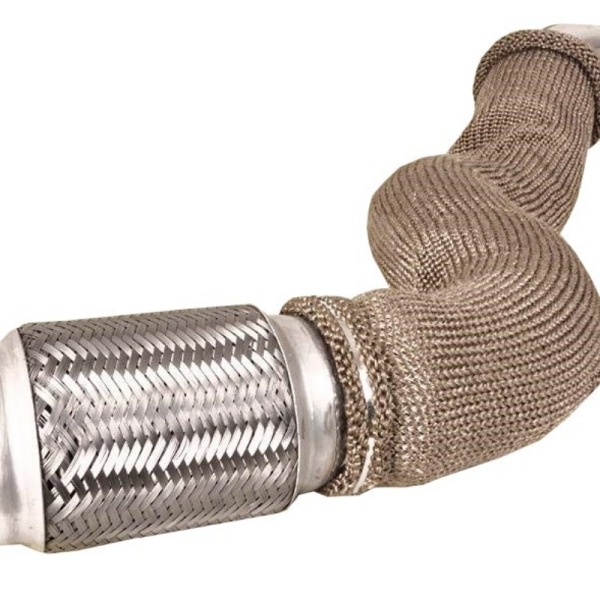
Par exemple, le BSTFLEXIsolation thermique des gaz d'échappement d'un chauffage dieselest conçu pour les tuyauteries d'échappement compactes utilisées dans des applications telles que les systèmes de chauffage diesel.
Les solutions de manchonnage et d'isolation peuvent s'avérer particulièrement utiles dans les cas suivants :
L'espace d'installation est limité ;
le tuyau est relativement petit ;
Une couverture continue est requise ;
L'installation d'un écran rigide serait difficile.
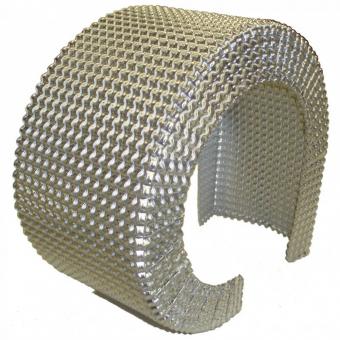
Un écran métallique ne touche pas nécessairement le tuyau.
En général, il est installé avec un espace contrôlé entre le bouclier et la source de chaleur.
Cette configuration est particulièrement efficace pour réduire la chaleur rayonnante vers les composants voisins.
Les matériaux courants comprennent :
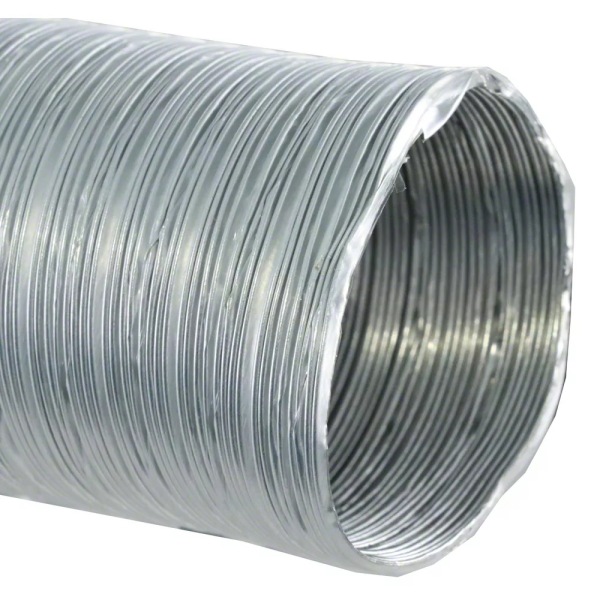
aluminium;
acier inoxydable;
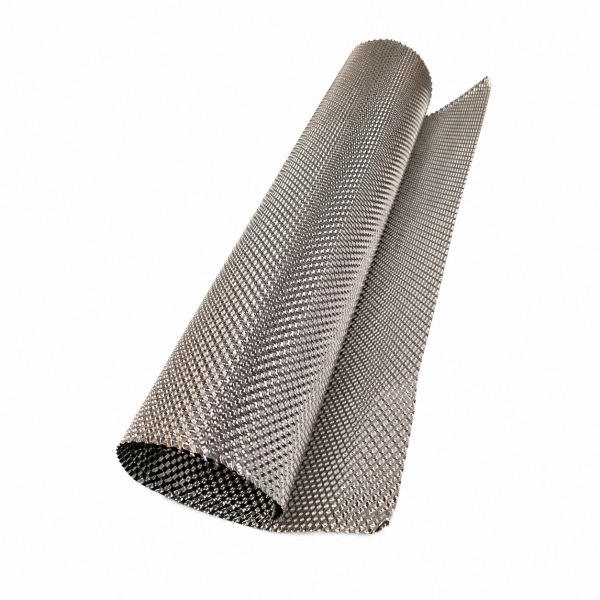
acier inoxydable gaufré ;
alliages de nickel.
Un écran thermique métallique peut être préférable lorsque :
L'épaisseur de l'installation doit rester faible ;
La résistance aux chocs mécaniques est importante ;
le bouclier doit conserver une forme spécifique ;
La chaleur rayonnante est la principale préoccupation.
Pour les environnements difficiles, BSTFLEX fabrique égalementÉcran thermique en alliage 625 Inconelcomposants.
Ces termes sont souvent utilisés indifféremment, mais leur fonction technique peut différer.
Isolation du tuyau d'échappementElle entoure normalement le tuyau et limite le transfert de chaleur grâce à une couche isolante.
Unécran thermique du tuyau d'échappementIl se place normalement entre le tuyau et le composant qui nécessite une protection.
L'un contient de la chaleur.
L'autre bloque ou redirige.
Dans certains systèmes d'échappement, les deux sont utilisés.
Un moteur diesel peut être équipé d'une couverture isolante amovible autour du tuyau d'échappement, tandis qu'un blindage en acier inoxydable protège un boîtier électrique situé à proximité.
That combination can provide better thermal control than either solution alone.
Material selection should begin with continuous operating conditions.
Fiberglass is one of the most widely used materials for exhaust insulation.
Advantages include:
flexibility;
good thermal resistance;
availability in many constructions;
practical manufacturing cost.
Fiberglass can be used in:
blankets;
tapes;
wraps;
sleeves;
composite heat shields.
It is often suitable for moderate and high-temperature exhaust applications where extreme temperature exposure is not continuous.
High silica material is selected when higher heat resistance is required.
It may be used as:
outer fabric;
inner hot-side layer;
insulation textile;
heat-resistant wrap.
Silica constructions are useful around:
turbocharged exhaust systems;
manifolds;
high-output diesel engines;
industrial exhaust equipment.
Basalt-based materials are frequently used in automotive and performance exhaust insulation.
They offer:
flexible installation;
strong heat resistance;
good compatibility with wrapped exhaust tubes.
Basalt is often seen in heat wrap and shaped blanket applications.
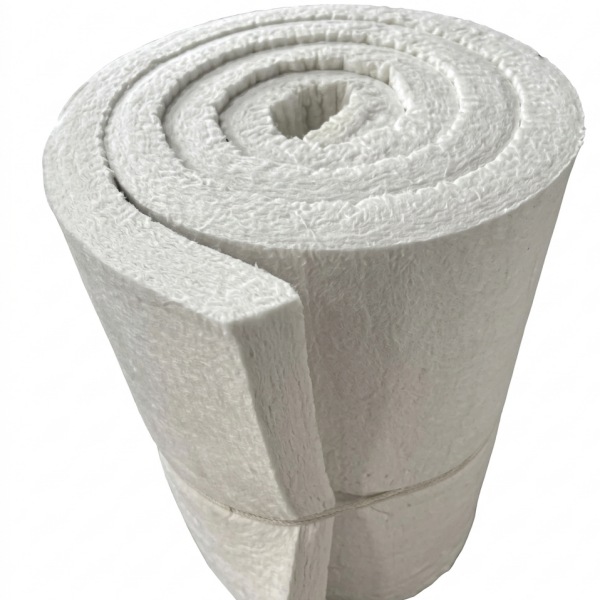
Where a greater temperature reduction is required within limited space, high-temperature insulation cores may be used.
These materials are normally enclosed within:
fiberglass fabric;
silica fabric;
stainless steel foil;
stainless steel mesh.
The insulation core should not be evaluated separately from the blanket construction.
Aluminum is primarily used as a reflective surface rather than a thick insulation medium.
Its low weight makes it particularly suitable for:
automotive underbody protection;
exhaust pipe heat shields;
muffler shields;
vehicle floor insulation.
Stainless steel is preferred where the exhaust heat shield also requires mechanical strength.
It performs well in applications exposed to:
vibration;
road debris;
repeated thermal cycling;
higher temperatures.
Nickel alloys such as Alloy 625 are reserved for demanding environments where temperature, oxidation and corrosion requirements exceed the limits of conventional sheet metals.
A thicker insulation layer generally reduces heat transfer more effectively, but this does not mean the thickest available blanket is automatically the best design.
Increasing thickness can create problems with:
component clearance;
mounting brackets;
adjacent pipe routing;
sensor access;
engine compartment packaging.
In tightly packaged automotive systems, only a few millimeters of space may be available.
In a large generator enclosure, considerably thicker insulation may be practical.
The correct insulation thickness should therefore balance thermal performance with installation geometry.
Diesel exhaust pipes frequently operate for long periods under load.
Heat containment becomes especially important in:
trucks;
construction equipment;
agricultural machinery;
industrial engines;
stationary power systems.
A removablediesel exhaust pipe insulationsystem can reduce heat released into the surrounding engine compartment while still allowing service access.
Generator exhaust piping often runs through compact acoustic enclosures.
This creates a concentrated heat source close to:
electrical cabinets;
acoustic materials;
engine components;
service areas.
A generator exhaust insulation system commonly uses removable sections around pipes, elbows and silencers.
This also allows the insulation to be removed during maintenance without replacing the entire system.
Marine exhaust systems present additional concerns including:
limited ventilation;
moisture;
salt exposure;
vibration;
restricted service space.
For dry marine exhaust systems, segmented blankets are often preferred because they allow easy access to flanges and exhaust connections.
Passenger and performance vehicles use exhaust insulation for:
headers;
downpipes;
catalytic converters;
center exhaust pipes;
mufflers.
Depending on available space, solutions may include:
wrap;
shaped blanket;
metal shield;
reflective barrier.
Industrial engines and machinery may use large-diameter exhaust lines that require customized blanket sections.
These applications often place greater importance on:
durability;
repeatable installation;
service access;
identification of individual insulation sections.
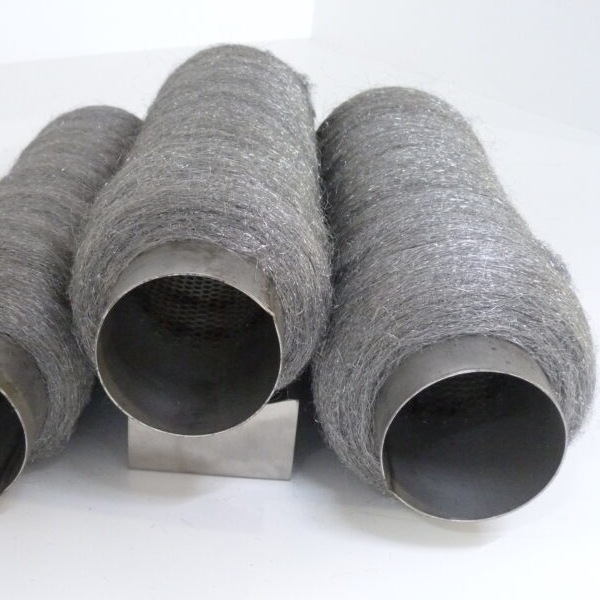
A bend is often more difficult to insulate than a straight pipe.
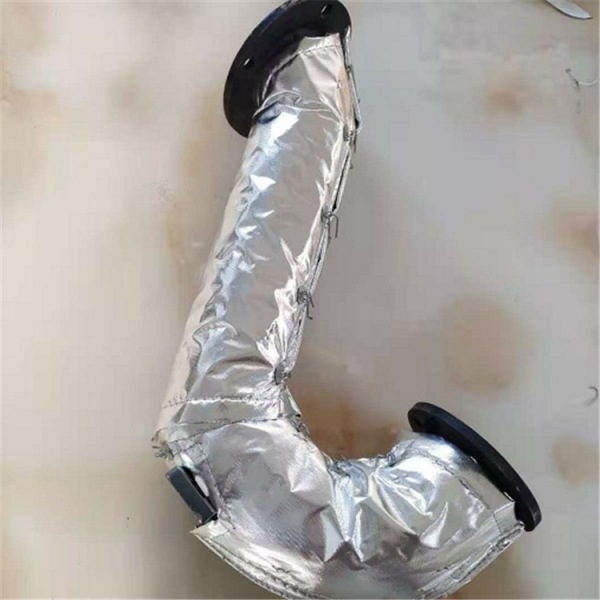
Wrap can follow gradual bends, but large industrial elbows may benefit from a fitted insulation blanket.
The BSTFLEXThermal Insulation Elbow Blanketis designed for curved exhaust geometry where a standard flat insulation section cannot maintain consistent coverage.
A well-designed elbow blanket should consider:
bend radius;
flange position;
pipe diameter;
seam location;
fastener access.
One of the most common weaknesses in an exhaust insulation system is the flange area.
A thick blanket may work well on the pipe but leave a large exposed metal flange.
That exposed section can become a strong local heat source.
For higher-performance systems, insulation should therefore be designed around:
flange diameter;
bolt access;
connection points;
sensors;
expansion joints.
A removable flap or separate flange blanket may be used where regular access is required.
For serious OEM projects, saying “we need exhaust insulation” is not enough.
A better specification is:
exhaust pipe operating temperature;
ambient temperature;
pipe diameter;
required outer surface temperature;
insulation thickness limit;
airflow condition.
This allows the insulation design to be evaluated against a measurable target.
Without these conditions, it is difficult to compare two insulation systems accurately.
Maintenance requirements are particularly important for:
marine engines;
generators;
mining equipment;
construction machinery;
industrial engines.
If technicians need frequent access to exhaust joints or engine components, permanent wrap can create additional maintenance work.
A removable blanket is usually more practical in these situations.
A segmented system may be designed so that:
each section has an identification mark;
only the required section is removed;
the blanket can be reinstalled after inspection.
This reduces disruption during service.
A high published temperature rating does not guarantee that the complete insulation system will perform correctly.
The full assembly must be considered.
An insulation material that performs well in a laboratory may fail quickly if it rubs continuously against a bracket or neighboring component.
Insulation should not prevent access to:
sensors;
clamps;
inspection ports;
flange bolts.
An exhaust system may need different thermal solutions in different areas.
For example:
manifold: shaped blanket;
straight pipe: wrap;
elbow: removable blanket;
muffler: metal shield.
The outer layer must suit the operating environment, not just the temperature.
Instead of selecting exhaust insulation by material name, use the following sequence.
For a simple tubular pipe:
Consider exhaust wrap or sleeve insulation.
For a pipe that requires regular inspection:
Use a removable pipe insulation blanket.
For an irregular elbow or flange:
Use a custom shaped blanket.
For protecting a nearby panel from radiant heat:
Use a metal or reflective heat shield.
For extreme heat and demanding environments:
Evaluate high-silica, high-temperature fiber, stainless steel or nickel-alloy constructions.
This approach is more reliable than choosing one product type for the complete exhaust system.
For accurate design and quotation, provide:
Pipe dimensions
outside diameter;
overall insulated length;
bend radius;
flange dimensions.
Temperature
normal operating temperature;
maximum temperature.
Installation environment
automotive;
marine;
generator;
industrial;
outdoor;
enclosed.
Service requirement
removable;
permanent;
frequency of maintenance.
Performance requirement
target external temperature;
maximum insulation thickness.
Project information
sample or drawing;
prototype quantity;
expected production volume.
The more complete the input data, the easier it is to design an insulation system that fits correctly from the first prototype.
Exhaust pipe insulation is worth considering whenever an exhaust line creates unacceptable heat exposure for the surrounding system.
The decision should be driven by actual conditions rather than by appearance.
If the objective is to lower heat around the pipe, protect surrounding components or create a safer service environment, an insulation blanket, wrap, sleeve or heat shield may be appropriate.
For applications involving multiple exhaust components, the best result often comes from combining several insulation methods.
BSTFLEX manufacturesexhaust heat shield insulation, removable blankets, exhaust wraps, lagging and custom metal heat shields for automotive, marine, diesel, generator and industrial exhaust systems.
Pour une isolation sur mesure des tuyaux d'échappement, veuillez indiquer leurs dimensions, la température de fonctionnement, l'environnement d'installation et la quantité requise. Une isolation adaptée pourra ainsi être sélectionnée en fonction du système d'échappement lui-même, et non selon une plage de températures de fonctionnement standard.

No.10, Chuangxin North Road, Nanshan Park, Ningguo Economic and Technological Development Zone, Ningguo City, Anhui Province, China
tél/Whatsapp : 0086-15856303740
e-mail : sales@bstbraidedsleeve.com
Skype : vanesa-cheng