que cherchez-vous?

A transmission wire harness can operate close to hot transmission housings, exhaust pipes, catalytic converters, turbocharger-related components and other concentrated heat sources. In these locations, the harness may require more than conventional abrasion protection. A correctly designed transmission wire harness heat protection sleeve must control thermal exposure while still fitting the harness geometry, assembly process and vehicle packaging space.
Unlike a general-purpose high-temperature sleeve, an automotive transmission harness shield is often developed around a specific component. The design may need a defined length, inside diameter, cutouts, fixing points, reinforced ends or other features that keep the sleeve in the correct position during assembly and vehicle operation.
BSTFLEX manufactures aluminized heat protective sleeves and custom thermal protection components for automotive wire harnesses, hoses, cables and fluid lines.
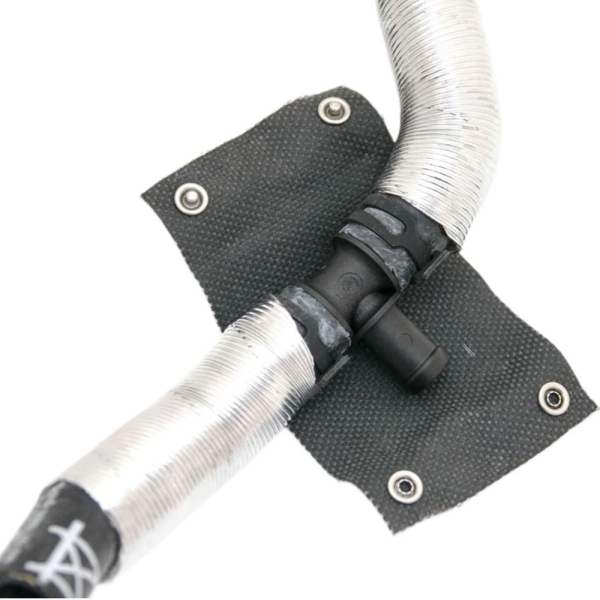
Transmission wiring connects sensors, solenoids, control modules and other electrical components while passing through a mechanically and thermally demanding part of the vehicle.
Depending on the vehicle architecture, a harness may be located near:
The thermal problem is not always caused by direct contact. A hot exhaust surface can transfer significant radiant energy across an air gap and raise the temperature of the nearby harness, connector or protective conduit.
The purpose of a transmission harness heat shield is therefore to reduce the thermal load reaching the electrical assembly while maintaining sufficient flexibility for routing and installation.
A common specification mistake is to begin with a material temperature rating and assume that the same value represents the temperature protection provided to the harness.
These are different properties.
A sleeve may use materials capable of tolerating high temperatures, but the temperature reached by the protected harness depends on several additional factors:
For an OEM project, it is therefore better to define the required harness temperature limit and operating environment before finalizing the sleeve construction.
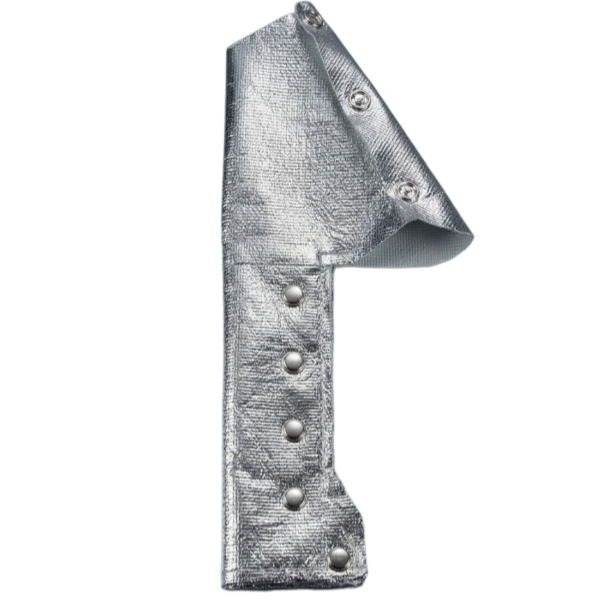
Transmission harnesses routed close to an exhaust system are frequently exposed to radiant heat rather than direct-contact heat.
In this condition, an aluminized outer surface can be useful because it reflects a portion of the radiant energy before it enters the sleeve structure.
The effectiveness of a reflective heat shield also depends on installation. A clean reflective surface facing the heat source and a suitable air gap generally provide a different thermal result from the same sleeve pressed directly against a hot surface.
Where the application involves direct contact, conduction or a generally high ambient temperature, additional insulation layers or another sleeve construction may be required.
A transmission wire harness protection sleeve can be manufactured in several ways depending on thermal and mechanical requirements.
A common design uses a reflective aluminum outer layer combined with a fiberglass textile substrate. The aluminum surface addresses radiant heat, while the fiberglass structure provides flexibility and supports the sleeve.
This type of construction is particularly suitable when the harness runs close to exhaust components but does not continuously contact the hot surface.
Higher thermal loads may require more than a single reflective textile layer. A composite sleeve can combine:
The correct layer combination depends on the required temperature reduction and available package thickness.
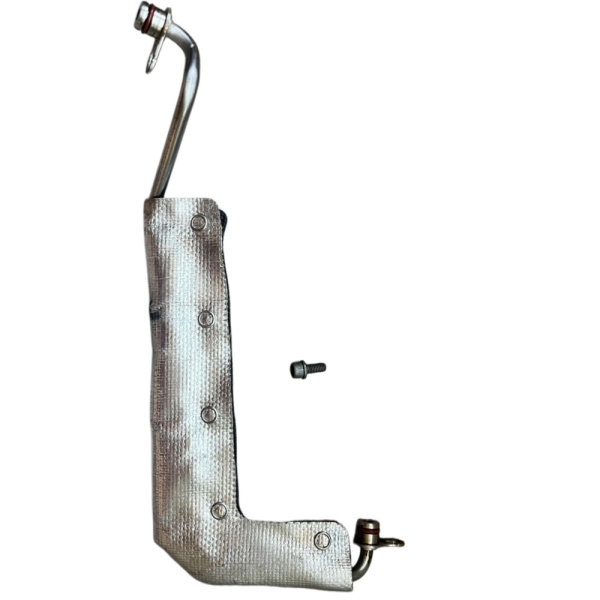
A straight tubular sleeve is not always suitable for a finished transmission harness. Branches, connectors, brackets or fixing points may require a sewn or shaped construction.
For complex assemblies, BSTFLEX can also develop custom-shaped aluminized fiberglass automotive heat shields based on drawings or physical samples.
Two of the most important inputs in a thermal protection project are the heat-source temperature and the minimum distance between that source and the harness.
A sleeve specified for a harness 150 mm away from a hot exhaust component is solving a different thermal problem from a sleeve installed only a few millimeters away.
For this reason, an RFQ should ideally identify:
These values give the supplier a much better basis for evaluating material and construction options than a request such as “need a 500°C sleeve.”
The most useful thermal specification is often the maximum temperature that the protected wiring assembly is allowed to reach.
This limit may be controlled by:
A thermal sleeve should therefore be selected as part of the complete harness system rather than as an isolated material.
SAE J2302 is a standardized method for evaluating the thermal effectiveness of sleeve, tubing and tape insulation under radiant heat exposure.
The method compares the surface temperature of a standardized test body with and without the protective sleeve under defined radiant heat conditions. The measured temperature difference provides an indication of the sleeve's effectiveness against radiant heat.
This is useful in automotive thermal protection because it evaluates thermal performance rather than simply reporting the maximum temperature capability of the raw material.
Where an OEM drawing or customer specification references SAE J2302, the actual sleeve construction should be evaluated under the required conditions. A product should not be described as SAE J2302 compliant or tested unless the relevant construction has actually been tested accordingly.
Radiant heat shielding and heat containment are different engineering problems.
SAE J2302 addresses radiant heat flow toward a protected component. By comparison, SAE J2495 is associated with the thermal containment efficiency of sleeve materials used around a hot component.
For a transmission wire harness located near an exhaust pipe, radiant heat effectiveness is usually the more relevant starting point. For a sleeve installed around a hot pipe to keep heat inside that pipe, the thermal problem is different.
A transmission harness sleeve must fit the protected bundle without creating unnecessary installation difficulty.
If the sleeve is too tight:
If it is excessively loose:
The specification should therefore include the harness outside diameter, dimensional tolerance and any local changes in bundle size.
The sleeve should cover the section of harness exposed to the thermal source, but adding unnecessary length can increase cost and assembly time.
When preparing a drawing, identify:
For high-volume automotive production, consistent cut length is important because it determines the final position of other features such as eyelets, holes and notches.
A transmission harness often includes branches or mounting features that prevent a simple straight sleeve from fitting correctly.
Custom notches and cutouts can allow the heat shield to clear:
These features should be defined by drawing whenever possible so that their position relative to the sleeve ends remains repeatable.
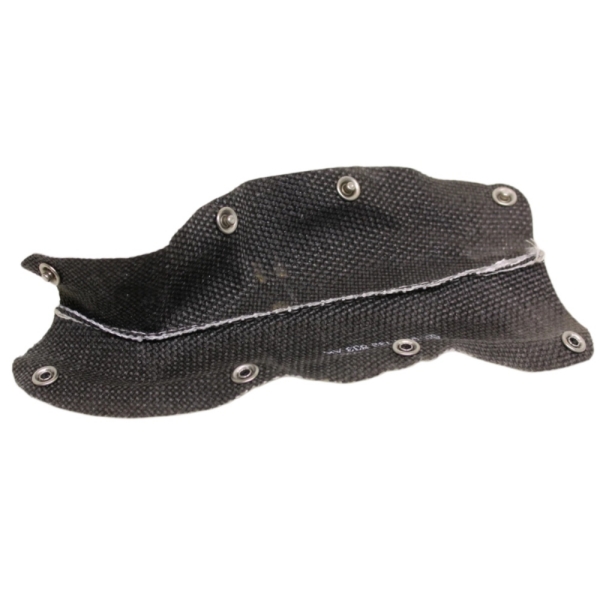
Thermal performance is only useful if the sleeve remains over the intended part of the harness.
Depending on the assembly, retention can be achieved with:
Eyelets can provide a defined attachment point that helps control sleeve location relative to the harness.
For OEM applications, the location and strength of the retention feature should be treated as part of the component specification rather than as an optional finishing detail.
The ends of a textile heat sleeve may need additional processing to improve assembly or prevent the layers from separating.
Depending on the construction, finishing methods may include:
The best method depends on the materials used and whether the sleeve needs to accommodate repeated flexing.
The harness assembly process has a direct influence on sleeve design.
| Harness Condition | Typical Sleeve Design |
|---|---|
| Harness before connectors are installed | Slide-on tubular sleeve |
| Completed harness with large connectors | Wrap-around sleeve |
| Harness requiring future service access | Hook-and-loop or removable sleeve |
| High-volume assembly requiring defined closure | Snap or engineered mechanical closure |
| Harness with branches and irregular geometry | Custom sewn or shaped heat shield |
A slide-on construction is generally simpler, but only when the harness geometry and assembly sequence allow it.
Thermal protection should not be evaluated independently of harness routing.
Even a high-performance sleeve can be compromised if the completed harness is routed significantly closer to the exhaust system than expected.
During design review, check:
In some cases, improving the harness route by a small distance may reduce thermal exposure enough to permit a thinner and more flexible heat protection construction.
A transmission harness sleeve may also contact nearby brackets, clips or vehicle structures. Thermal performance therefore cannot be the only design consideration.
Depending on the installation, engineers may also need to specify:
If substantial mechanical wear is expected, a separate abrasion layer or combined thermal-mechanical protective construction may be required.
Transmission-area components may encounter oil mist, water, road contamination or other automotive fluids.
The complete sleeve construction, including reflective surface, adhesive, sewing thread and closure system, should therefore be evaluated for the actual operating environment.
A reflective layer that performs well in a laboratory when new may not provide identical long-term results if its surface becomes mechanically damaged or heavily contaminated.
For a new automotive platform, prototype development usually begins with the harness geometry and thermal environment.
A practical development package may include:
If drawings are incomplete, a physical sample or detailed photographs can also help define the initial prototype.
A sleeve that works thermally in a prototype must also be manufacturable consistently in series production.
For OEM supply, the manufacturing process may need to control:
High-volume projects may also require fixtures, cutting tools or other dedicated production methods to maintain these characteristics.
A transmission harness heat shield is a functional automotive component, so inspection should address both dimensional and visual characteristics.
Depending on the customer drawing, inspection may include:
For critical OEM projects, inspection requirements should be established before mass production rather than added after the component has been designed.
For an efficient technical review, send as much of the following information as possible:
| Required Information | Why It Matters |
|---|---|
| Harness diameter | Defines sleeve size |
| Protected length | Defines component dimensions |
| Heat-source temperature | Defines thermal severity |
| Minimum clearance | Important for radiant heat assessment |
| Maximum harness temperature | Defines required thermal performance |
| Harness drawing | Shows branches, connectors and mounting features |
| Installation sequence | Determines slide-on or wrap-around construction |
| Fixing method | Prevents sleeve movement |
| Validation requirement | Defines required testing |
| Annual quantity | Helps determine manufacturing process |
BSTFLEX manufactures aluminized and textile thermal protection products for automotive wire harnesses, cables, hoses and fluid lines. Designs can range from standard flexible sleeves to customized parts with notches, cutouts, fasteners, reinforced ends and component-specific geometry.
The broader selection of automotive reflective sleeves is available in the Aluminized Heat Protective Sleeve category.
For general wire harness material and design selection, see Automotive Wire Harness Heat Protection Sleeves: Materials, Designs and Applications.
For a new transmission harness thermal protection project, send BSTFLEX the component drawing, harness dimensions, heat-source temperature, clearance, target harness temperature and required validation standard. We can evaluate the geometry and recommend a suitable construction for prototype development.
It is a thermal protective sleeve installed around wiring associated with an automotive transmission. Its purpose is to reduce heat exposure from nearby transmission, exhaust or other hot components while maintaining the flexibility and routing required by the harness.
A bright aluminized outer surface is useful for reflecting radiant heat from nearby exhaust components. It is commonly combined with fiberglass or another insulating textile that provides the structural and thermal layer beneath the reflective surface.
There is no universal distance. Required clearance depends on exhaust temperature, sleeve construction, exposure duration, air movement and the maximum temperature allowed for the harness. The actual installation should be evaluated against the required thermal performance.
No. A sleeve's material temperature capability indicates what the sleeve material can tolerate. The temperature reached by the protected harness depends on the complete thermal environment, including heat-source temperature, distance, sleeve structure and exposure time.
SAE J2302 evaluates the effectiveness of sleeve, tubing or tape insulation against radiant heat by comparing test-body temperatures with and without the protective material under defined conditions.
Yes. Custom designs can incorporate notches, holes, eyelets, cutouts, reinforced ends and other features required for positioning or integration with the harness assembly.
Yes, if a wrap-around, hook-and-loop, snap-closure or another openable construction is used. A conventional tubular sleeve normally requires the harness or its connectors to pass through the sleeve.
Yes. A drawing is preferred for dimensional control, but existing parts, harness samples and installation photographs can also be used during initial development.
Mots clés :

No.10, Chuangxin North Road, Nanshan Park, Ningguo Economic and Technological Development Zone, Ningguo City, Anhui Province, China
tél/Whatsapp : 0086-15856303740
e-mail : sales@bstbraidedsleeve.com
Skype : vanesa-cheng