que cherchez-vous?
Marine engine rooms have very little room for uncontrolled exhaust heat.
Exhaust pipes, risers, elbows, manifolds and silencers can operate at temperatures high enough to affect nearby hoses, wiring, equipment, structural surfaces and personnel access areas. In an enclosed engine room, the heat released by one exhaust component can also contribute to the overall thermal load of the space.
A properly engineered marine exhaust insulation system helps contain that heat and directs thermal protection where it is needed.
For marine applications, the insulation itself is only part of the solution. The system must also accommodate vibration, moisture, salt exposure, restricted access and routine engine maintenance.
BSTFLEX manufactures exhaust heat shield insulation and custom thermal protection systems for marine exhaust pipes, risers, elbows, manifolds, turbochargers and other high-temperature components.
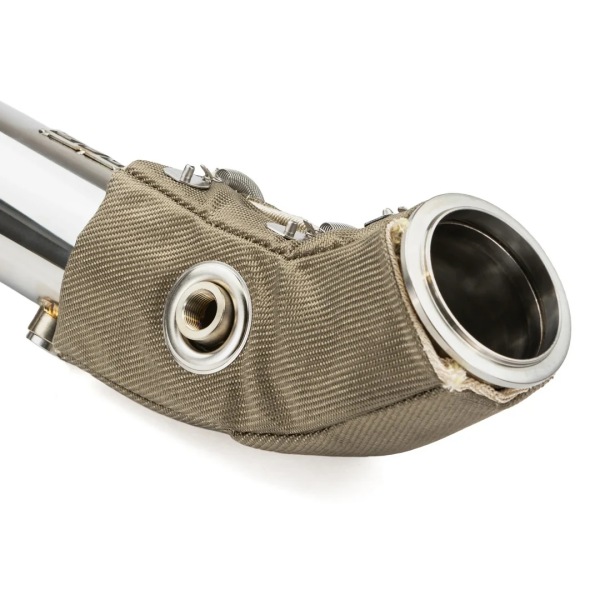
The first distinction to make is between the hot exhaust sections that require thermal protection and the surrounding components that need protection from them.
A typical marine diesel installation may contain:
Engine → Exhaust Manifold → Turbocharger → Exhaust Riser → Elbow → Exhaust Pipe → Silencer
Not every section requires the same insulation construction.
A straight pipe may use removable pipe lagging.
A large elbow may require a shaped blanket.
A turbocharger may require a dedicated fitted blanket.
A nearby fuel line may require a separate heat shield.
This component-based approach is particularly important on marine equipment because space, ventilation and service access are usually limited.
Marine exhaust thermal protection can be applied to many areas of a vessel's exhaust system.
Risers are often positioned close to engine-room equipment and structural components.
A removable insulation blanket can cover the hot surface while leaving mounting points and service areas accessible.
An elbow has changing geometry, which makes conventional wrapping less straightforward.
A shaped thermal blanket can follow the bend and maintain more consistent coverage around the component.
Longer straight sections can be insulated using:
removable pipe blankets;
flexible lagging;
high-temperature sleeves;
exhaust wrap;
multilayer insulation jackets.
The appropriate choice depends on temperature, diameter, clearance and maintenance requirements.
Manifolds are compact high-temperature components and can radiate substantial heat into the surrounding engine compartment.
A fitted exhaust manifold insulation blanket can provide thermal containment while accommodating the geometry of the manifold.
Turbocharger housings often require specially shaped insulation because of their complex geometry and high localized temperature.
A custom blanket can be produced around the housing rather than attempting to wind flat wrap around an irregular component.
Large silencers have a considerable external surface area.
A removable insulation jacket can reduce heat release from the silencer while allowing individual sections to be removed during maintenance.
Marine equipment is not a static installation.
Engines require inspection, servicing and component replacement throughout their operating life.
An exhaust connection may need to be accessed for:
bolt inspection;
gasket replacement;
pipe inspection;
sensor servicing;
flange maintenance;
exhaust leak investigation.
If the insulation is permanently bonded or wrapped around the complete exhaust line, accessing the component may require cutting away the insulation.
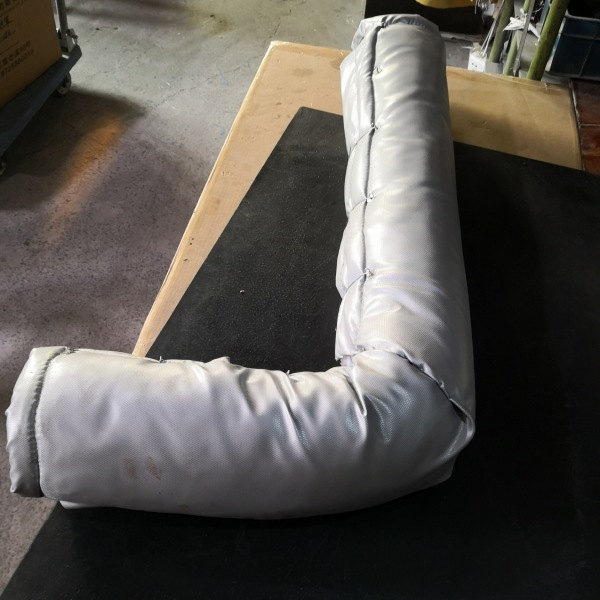
A marine exhaust insulation blanket is different.
The blanket can be designed with mechanical fastening so that technicians can:
release the fastening system;
remove the required section;
inspect the exhaust component;
carry out maintenance;
reinstall the insulation.
This makes removable construction particularly useful for commercial vessels, workboats, marine generators and other equipment where serviceability matters.
A marine exhaust blanket normally consists of several functional layers.
The exact construction depends on the exhaust temperature and operating environment.
The inner surface faces the exhaust component.
Possible materials include:
fiberglass fabric;
high-silica fabric;
stainless steel mesh;
stainless steel foil;
other high-temperature textiles.
The hot-side layer protects the insulation core from direct contact with the exhaust component and provides the required temperature resistance.
The core provides the main thermal resistance.
Depending on the application, the blanket may incorporate:
fiberglass insulation;
high-temperature mineral or ceramic-type insulation;
silica-based insulation;
other engineered thermal materials.
Core thickness can be adjusted according to the required thermal performance and available installation space.
The outer surface protects the blanket from the marine environment and mechanical handling.
Depending on the application, the outer construction may use:
coated fiberglass;
high-temperature textile;
silicone-coated fabric;
stainless steel mesh;
other protective materials.
Marine blankets may use:
stainless steel hooks;
springs;
wire lacing;
straps;
buckles;
sewn-in fastening systems.
Stainless hardware is particularly useful where corrosion resistance is important.
Not every exhaust line requires a fully custom blanket.
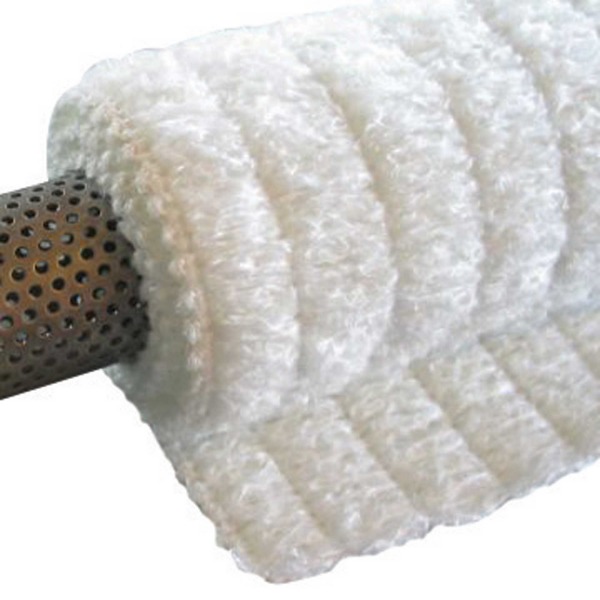
For relatively simple pipe geometry, marine exhaust lagging can provide a practical insulation solution.
Lagging is particularly suitable for:
straight exhaust pipes;
smaller diameter piping;
continuous pipe sections;
areas where complex cut-outs are unnecessary.
The insulation can be supplied in flexible sections and secured around the pipe.
Compared with a shaped blanket, lagging can simplify installation on long continuous pipe runs.
However, if the pipe contains:
flanges;
inspection points;
sharp bends;
sensor connections;
expansion joints;
a fabricated blanket may provide better serviceability.
Temperature is only one part of marine insulation design.
A vessel operates in an environment where the insulation may encounter:
humidity;
condensation;
salt spray;
cleaning water;
oil mist;
fuel contamination.
For this reason, the external covering should be selected according to the actual operating environment.
A high-temperature insulation core can perform well thermally but still require a protective outer construction to maintain mechanical integrity in service.
The blanket should also be designed so that water does not become trapped unnecessarily around the exhaust component.
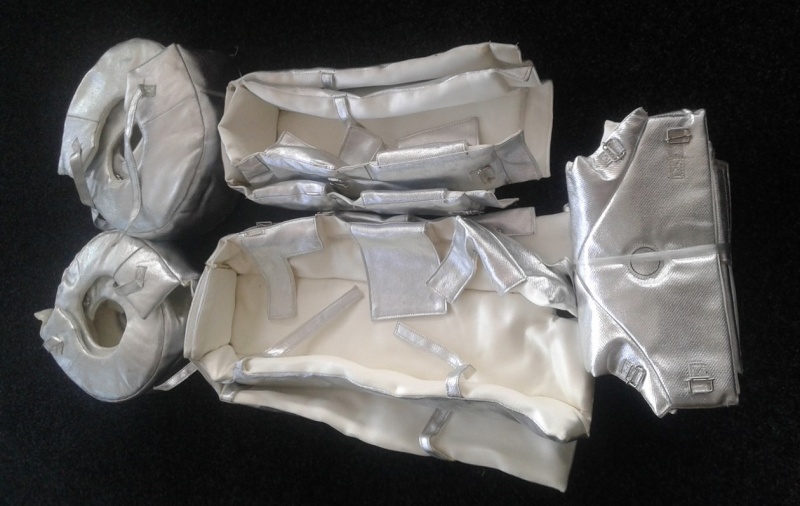
Marine engines generate continuous vibration.
The exhaust system itself can move relative to surrounding equipment.
This creates potential problems if the insulation:
rubs against brackets;
contacts neighboring pipes;
is installed too tightly;
has unsupported edges;
uses inadequate fastening.
A marine exhaust blanket therefore needs more than a heat-resistant fabric.
The complete assembly should consider:
thermal resistance + flexibility + abrasion resistance + fastening + clearance
This is one reason custom blanket construction is often preferable to adapting generic insulation products to a complex marine exhaust system.
A blanket should never be designed independently of the surrounding engine compartment.
Before specifying the insulation thickness, check the distance between the exhaust component and:
wiring;
hoses;
fuel systems;
hydraulic lines;
engine mounts;
structural members;
acoustic insulation;
service panels.
Adding a thick blanket can change the outside diameter of the exhaust assembly significantly.
In a crowded engine room, the available clearance may determine the maximum practical insulation thickness.
The correct question is therefore not:
“How thick can we make the insulation?”
It is:
“How much insulation can we install while maintaining the required thermal performance and mechanical clearance?”
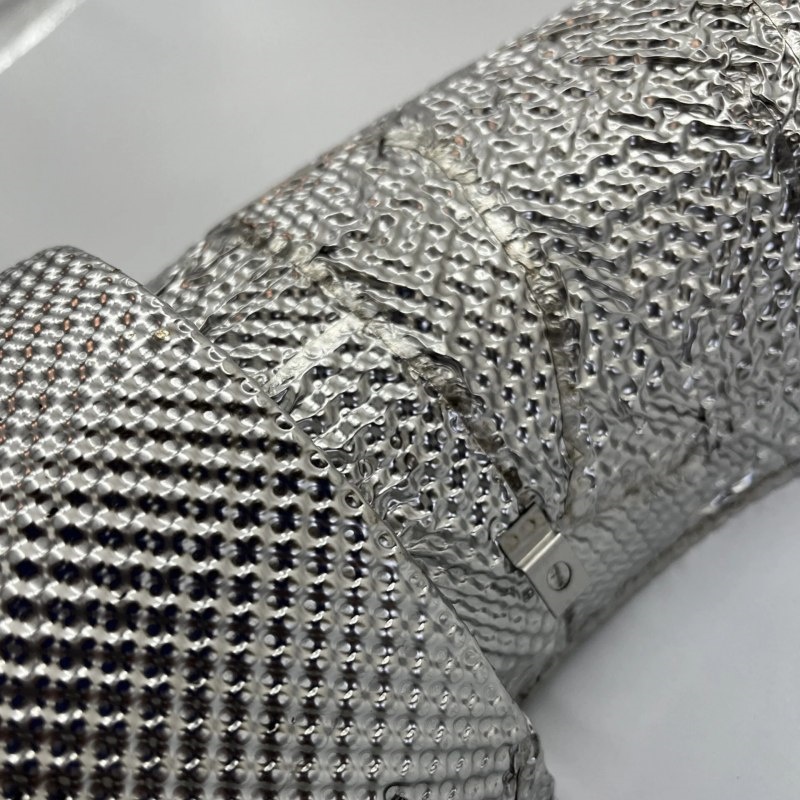
An engine room can contain several independent heat sources.
These may include:
exhaust manifolds;
turbochargers;
exhaust pipes;
generators;
hydraulic systems;
engine surfaces.
Exhaust insulation can help reduce one major contributor to the total heat load.
This can improve the thermal environment around sensitive equipment.
Potentially protected components include:
wiring harnesses;
electrical equipment;
control systems;
hoses;
sensors;
fuel-system components.
Personnel protection is another consideration.
Reducing the accessible surface temperature of exposed exhaust components can help reduce the risk associated with accidental contact during maintenance.
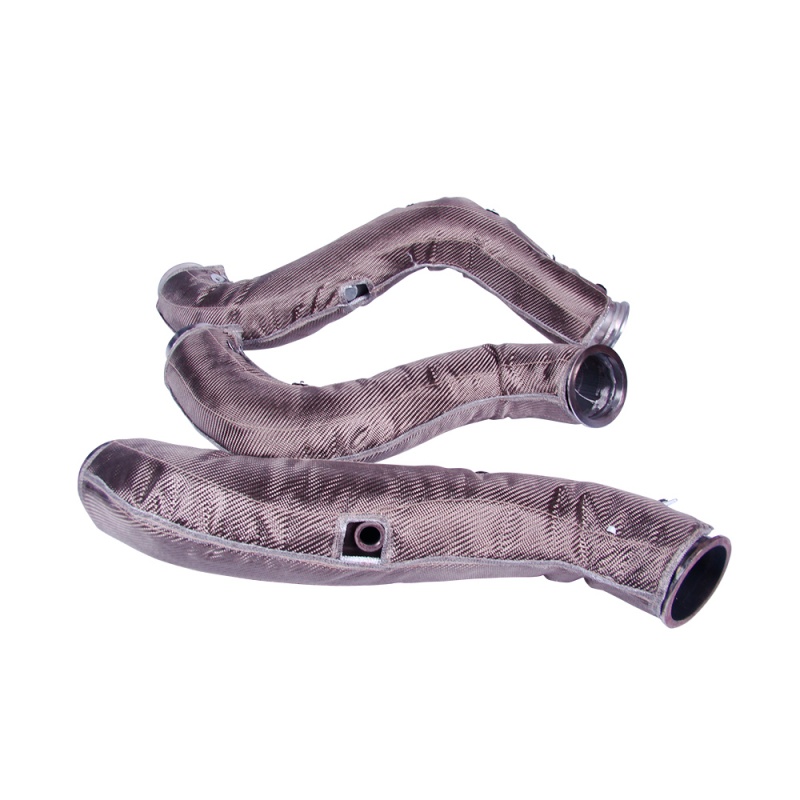
Exhaust wrap remains useful for selected tubular applications.
It can be practical where:
the pipe is relatively simple;
the geometry is predominantly tubular;
permanent installation is acceptable;
the pipe does not require frequent access.
A removable marine exhaust blanket becomes more attractive when:
the component has complex geometry;
maintenance access is required;
insulation thickness must be controlled;
the exhaust section is large;
the installation needs a defined external finish;
the insulation must be removed periodically.
For some marine systems, both methods can be used.
For example:
straight pipe → lagging
complex elbow → removable blanket
turbocharger → fitted blanket
nearby structural panel → reflective heat shield
This hybrid approach allows the insulation system to match each part of the exhaust installation.
Different marine exhaust systems have different requirements.
A practical option for general-purpose high-temperature textile construction.
It can be used for:
blankets;
lagging;
wraps;
protective covers.
A stronger candidate for high-temperature hot-side applications.
It can be incorporated into:
blanket facings;
wraps;
high-temperature insulation assemblies.
Useful when the insulation needs additional mechanical protection.
Stainless steel can function as:
mesh;
foil;
protective facing;
heat-shield material.
Useful for reflective barriers where lightweight construction is important.
Used when the primary objective is reducing heat transfer rather than simply providing a protective textile cover.
The final construction may combine several of these materials rather than relying on one.
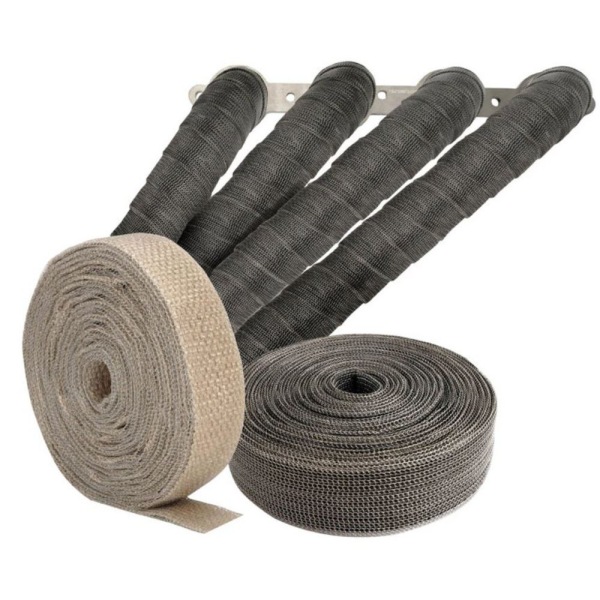
A custom blanket should follow the physical geometry of the exhaust component.
Important dimensions include:
Pipe outside diameter
This determines the basic circumference of a pipe blanket.
Insulated length
This determines how much of the exhaust component requires coverage.
Bend radius
Important for elbows and curved sections.
Flange dimensions
Required to maintain access to bolts and connections.
Component protrusions
Sensors, brackets, actuators and other projections must be accounted for.
Available clearance
The blanket must fit within the surrounding engine-room space.
Fastening location
Fasteners should remain accessible after installation.
For complicated assemblies, photographs and drawings are useful for developing the blanket pattern.
A useful RFQ should contain more than:
“Marine exhaust blanket, high temperature.”
Provide the following information whenever possible.
exhaust component type;
pipe diameter;
overall dimensions;
operating temperature;
maximum temperature.
vessel or equipment type;
engine model if relevant;
indoor or exposed installation;
available clearance.
salt exposure;
moisture;
oil contamination;
vibration;
cleaning requirements.
permanent or removable;
expected removal frequency;
service access points.
desired outer surface temperature;
maximum blanket thickness;
required heat reduction;
personnel protection requirements.
prototype quantity;
annual volume;
required delivery schedule.
This information gives the insulation manufacturer enough detail to select the construction instead of supplying a generic blanket.
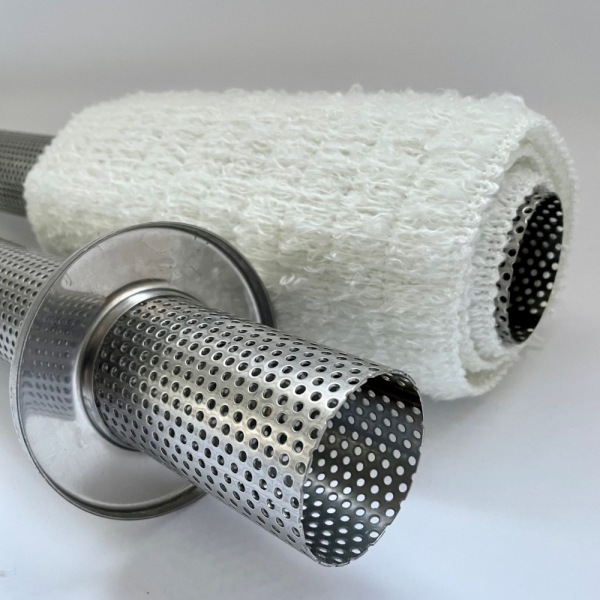
Commercial vessels typically place greater emphasis on:
durability;
serviceability;
repeatability;
corrosion resistance;
long operating hours.
A removable blanket system can be divided into identifiable sections.
For example:
Section A — Manifold
Section B — Turbocharger
Section C — Riser
Section D — Elbow
Section E — Exhaust Pipe
This makes inspection and replacement more manageable.
If one section becomes damaged, the entire insulation system does not necessarily need to be replaced.
Marine generators create another common exhaust insulation requirement.
Generator exhaust piping may pass through:
engine rooms;
machinery spaces;
enclosed compartments;
accommodation-adjacent areas.
Heat control is especially important where ventilation is limited.
A removable generator exhaust pipe insulation blanket can be designed around straight pipes, elbows and silencers.
The insulation can also be coordinated with nearby cable routes and equipment.
BSTFLEX manufactures custom generator exhaust insulation solutions that can be adapted to the required dimensions and operating conditions.
Marine exhaust insulation should not hide developing mechanical problems.
During routine maintenance, technicians should inspect:
blanket condition;
fastening hardware;
outer covering;
abrasion areas;
exposed seams;
evidence of oil contamination;
signs of exhaust leakage.
The insulation should be removed where necessary to inspect the exhaust component itself.
This is another reason removable construction is valuable.
The thermal protection system should support maintenance rather than prevent it.
A marine exhaust insulation system may require redesign when:
nearby components are still overheating;
the outer blanket surface is excessively hot;
insulation repeatedly shifts position;
fasteners loosen;
fabric is rubbing against adjacent components;
water or oil contamination damages the outer layer;
service technicians must cut the insulation apart to access the exhaust;
large sections of the exhaust remain exposed.
These problems do not necessarily mean the insulation material itself is unsuitable.
The underlying issue may be:
insufficient thickness;
poor fit;
incorrect material combination;
inadequate fastening;
insufficient clearance;
unsuitable outer covering.
The best marine exhaust insulation is not necessarily the material with the highest published temperature rating.
A successful system needs to work under the actual conditions of the vessel.
That means considering:
temperature
geometry
clearance
vibration
moisture
corrosion
maintenance
mechanical protection
installation
A removable blanket may be the right solution for one component while flexible lagging or a reflective heat shield is better for another.
The objective is to control exhaust heat without creating a new maintenance or packaging problem.
BSTFLEX provides custom thermal protection for marine exhaust systems, including:
marine exhaust blankets;
exhaust pipe insulation;
exhaust riser insulation;
exhaust elbow blankets;
manifold insulation;
turbocharger blankets;
generator exhaust insulation;
exhaust lagging;
metal heat shields.
Custom blankets can be developed according to:
component dimensions;
drawings;
photographs;
operating temperature;
required insulation thickness;
installation clearance;
fastening requirements.
The construction can be selected according to the application, using combinations of high-temperature fabrics, insulation cores, stainless steel components and protective outer materials.
For marine applications requiring removable insulation, the blanket can be divided into sections to provide access to critical exhaust connections during maintenance.
If you are sourcing insulation for a marine exhaust system, send BSTFLEX:
exhaust pipe or component dimensions;
operating temperature;
photographs or drawings;
required insulated areas;
available clearance;
marine operating environment;
expected quantity.
BSTFLEX can then recommend an appropriate combination of marine exhaust blanket, pipe lagging, exhaust insulation and heat shielding for the specific installation.
Mots clés :

No.10, Chuangxin North Road, Nanshan Park, Ningguo Economic and Technological Development Zone, Ningguo City, Anhui Province, China
tél/Whatsapp : 0086-15856303740
e-mail : sales@bstbraidedsleeve.com
Skype : vanesa-cheng