que cherchez-vous?
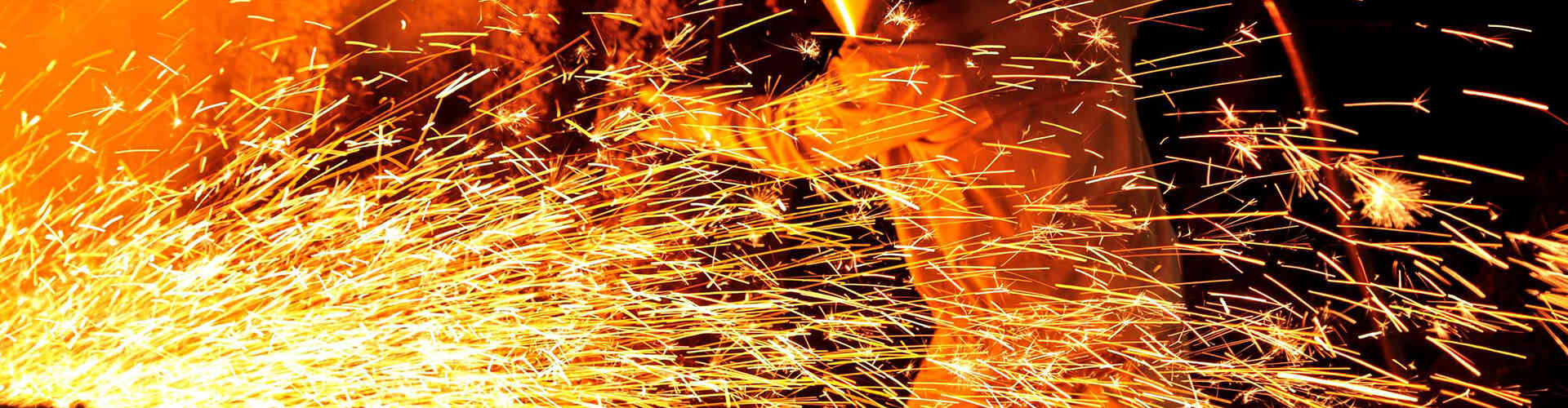
Le contrôle de la chaleur des gaz d’échappement ne consiste pas simplement à choisir le matériau ayant la température nominale la plus élevée.
La géométrie du composant d’échappement, l’accès nécessaire pour l’entretien, le niveau de vibration, l’environnement de fonctionnement et l’intervalle de maintenance prévu influencent tous la méthode d’isolation qui fonctionnera le mieux.
Les deux solutions les plus courantes sont la couverture d’échappement et la bande d’échappement.
Les deux peuvent réduire la chaleur rayonnée par les composants d’échappement, mais elles sont conçues pour des conditions d’installation différentes.
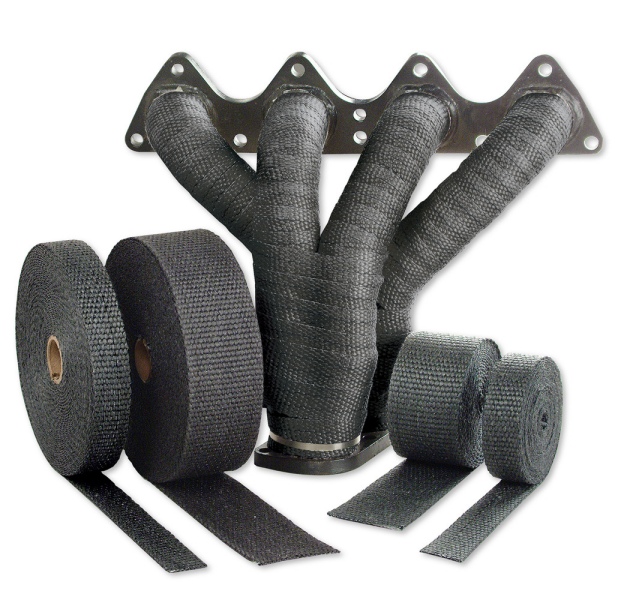
Une couverture d’échappement est généralement un ensemble d’isolation amovible façonné, fabriqué autour d’un composant spécifique. Une bande d’échappement est fournie sous forme de rouleau étroit de textile résistant à la chaleur qui est enroulé en spirale autour des tubes d’échappement.
Pour les tuyaux droits, les collecteurs et les sections tubulaires relativement simples, une bande d’échappement peut être une solution pratique. Pour les turbocompresseurs, les collecteurs, les coudes, les silencieux, les générateurs et les équipements nécessitant un entretien régulier, une couverture d’isolation d’échappement amovible offre généralement une plus grande flexibilité.
BSTFLEX fabrique à la fois des isolants de protection thermique pour échappement et des bandes thermiques pour échappement et collecteur, permettant de sélectionner la méthode d’isolation en fonction du système d’échappement réel plutôt que d’imposer un seul type de produit à chaque application.
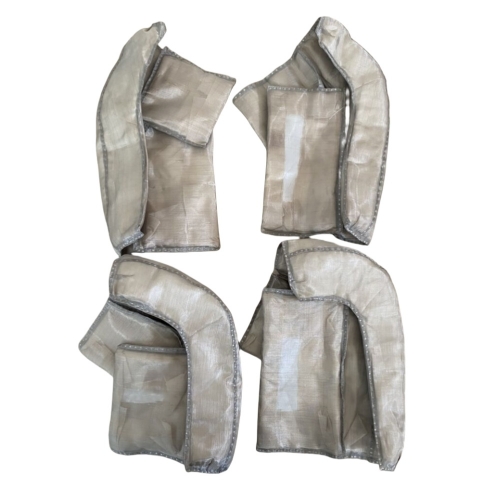
Pour les applications nécessitant une isolation amovible, une épaisseur d’isolation contrôlée ou la couverture de composants d’échappement complexes, une couverture d’échappement est généralement la meilleure option.
Pour les longs tubes d’échappement, les conduits individuels de collecteur, les tuyaux de moto ou les applications où une méthode d’enroulement continue à moindre coût est privilégiée, une bande d’échappement peut être plus pratique.
La distinction peut être résumée comme suit :
| Exigence | Couverture d’échappement | Bande d’échappement |
|---|---|---|
| Amovible pour l’entretien | Excellent | Faible |
| Géométrie complexe du composant | Excellent | Modéré |
| Long tuyau droit | Bon | Excellent |
| Épaisseur d’isolation constante | Excellent | Dépend de l’installation |
| Installation rapide sur site | Bon | Modéré |
| Conduits de collecteur | Limité selon la conception | Excellent |
| Carter de turbocompresseur | Excellent | Pas normalement préféré |
| Grand silencieux d'échappement | Excellent | Difficile |
| Échappement de générateur | Excellent | Bon pour des sections de tuyaux sélectionnées |
| Échappement sec marin | Excellent | Dépendant de l'application |
| Ajustement OEM personnalisé | Excellent | Limité |
| Coût initial du matériau | Plus élevé | Plus faible |
| Entretien répété | Excellent | Médiocre |
Le meilleur produit dépend donc de l'endroit où l'isolation sera installée.
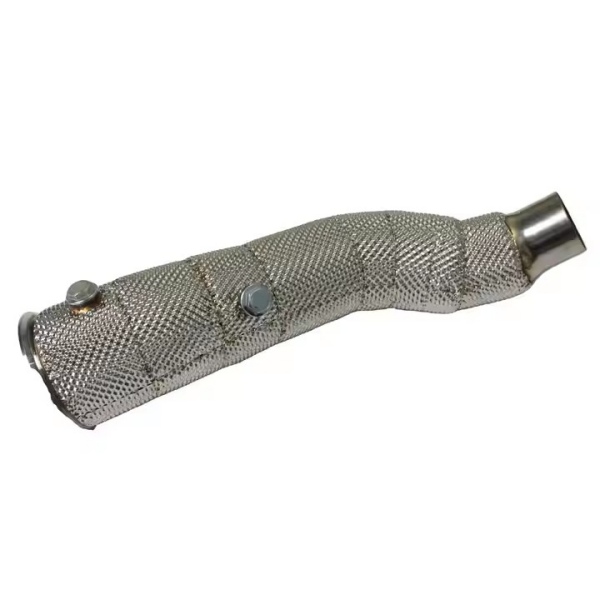
Un revêtement isolant d'échappement, également appelé une couverture isolante d'échappement, est un composant d'isolation thermique flexible fabriqué pour s'adapter autour d'une pièce d'échappement.
Contrairement à un rouleau de matériau isolant, la couverture est généralement fabriquée selon une forme prédéfinie.
Une construction typique peut inclure :
une couche intérieure côté chaud ;
un cœur isolant haute température ;
une couche extérieure durable en tissu ou avec revêtement métallique ;
des coutures renforcées ;
des crochets, ressorts, lacets métalliques ou autres éléments de fixation.
L'épaisseur de l'isolation peut être contrôlée sur toute la couverture, ce qui permet au fabricant de concevoir la barrière thermique en fonction de l'application.
BSTFLEX développe des couvertures d'échappement personnalisées pour des composants comprenant :
turbocompresseurs ;
collecteurs d'échappement ;
tuyaux de descente ;
tuyaux d'échappement ;
coudes d'échappement ;
silencieux ;
pots d'échappement ;
moteurs diesel ;
groupes électrogènes ;
systèmes d'échappement marins.
Pour un aperçu complet de cette construction, consultez le guide de couverture d'isolation d'échappement de BSTFLEX.
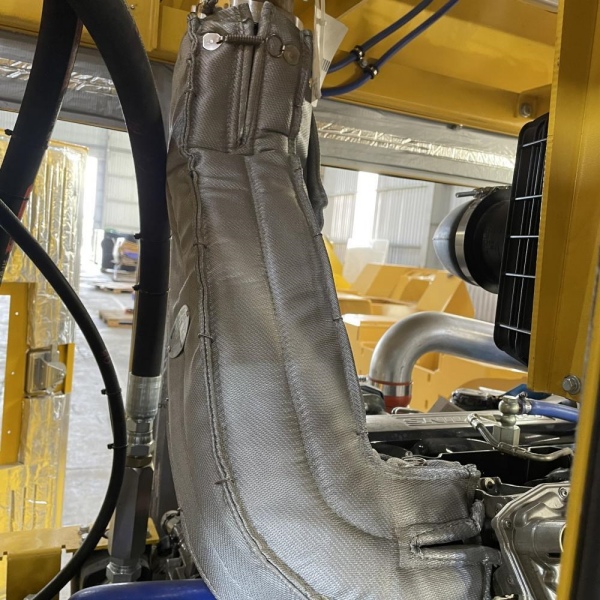
L'enroulement d'échappement est un ruban étroit d'isolation thermique tissé conçu pour être enroulé autour des tubes d'échappement en couches superposées.
Les matériaux courants comprennent :
fibre de verre ;
basalte ;
fibre de basalte de type titane ;
silice ou autres constructions textiles haute température.
L'installation commence généralement à une extrémité du tube d'échappement. L'enroulement est effectué autour du tuyau avec un chevauchement contrôlé et fixé à l'aide d'attaches ou de colliers en acier inoxydable.
BSTFLEX fournit une gamme complète d'enroulements thermiques pour échappement et collecteur destinée aux applications d'échappement automobiles, de motos, marines et industrielles. Google reconnaît actuellement cette catégorie comme couvrant les constructions d'enroulements en fibre de verre, basalte, renforcées de céramique et autres constructions haute température.
La plus grande différence entre une couverture d'échappement et un enroulement d'échappement ne réside pas simplement dans la fibre utilisée.
C'est la manière dont l'isolation est conçue autour du composant.
Une couverture est fabriquée avant l'installation.
Le fabricant peut contrôler :
la forme globale ;
l'épaisseur ;
l'emplacement des coutures ;
les ouvertures ;
les découpes ;
la position des fixations ;
la densité de l'isolation ;
le matériau côté chaud ;
matériau de protection extérieur.
La gaine devient le système d'isolation pendant l'installation.
Les performances finales dépendent donc davantage de :
pourcentage de chevauchement ;
tension d'enroulement ;
nombre de couches ;
technique de l'installateur ;
géométrie du tuyau ;
qualité de fixation.
Deux tuyaux enveloppés avec le même matériau peuvent donc avoir des épaisseurs d'isolation efficaces différentes si les méthodes d'installation diffèrent.
Les deux systèmes peuvent réduire la chaleur qui s'échappe d'un composant d'échappement, mais la manière dont ils y parviennent diffère.
Une couverture correctement conçue fournit une couche d'isolation relativement uniforme autour du composant.
Comme le cœur isolant peut être fabriqué avec une épaisseur spécifiée, les performances thermiques peuvent être conçues de manière plus prévisible.
Cela est utile lorsqu'un fabricant OEM ou un fabricant d'équipements a besoin d'une isolation reproductible sur plusieurs unités.
La gaine maintient également la chaleur près du tuyau, mais son épaisseur finale dépend de l'installation.
Un chevauchement plus serré crée des couches supplémentaires, tandis qu'un chevauchement insuffisant peut créer des zones avec une résistance thermique plus faible.
Pour un véhicule construit sur mesure, cela peut être acceptable. Pour un équipement de production nécessitant un assemblage uniforme entre les unités, une couverture fabriquée peut offrir une meilleure répétabilité.
Pour un tuyau d'échappement long et relativement droit, la gaine d'échappement présente souvent un avantage lors de l'installation.
Elle peut s'adapter à :
tubes droits ;
courbures progressives ;
tubes collecteurs ;
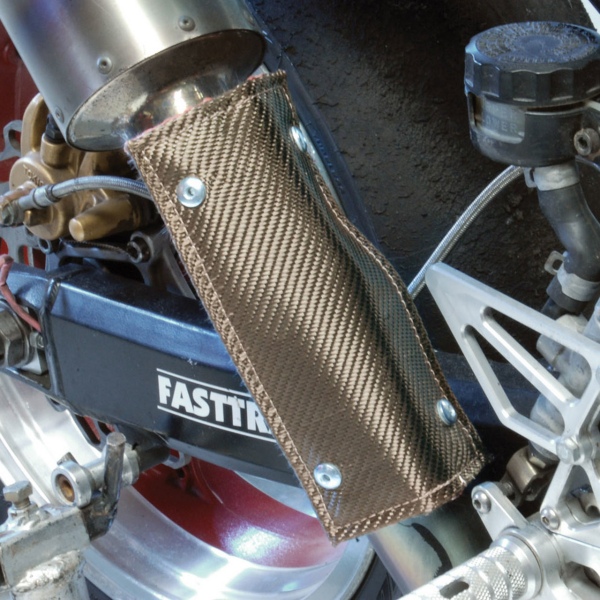
tubes d'échappement de moto ;
descentes d'échappement.
Il n'est pas nécessaire de fabriquer un composant d'isolation moulé séparé pour chaque section de tuyau.
Cependant, les couvertures d'échappement deviennent de plus en plus intéressantes lorsque le tuyau comprend :
brides ;
capteurs ;
joints de dilatation ;
connexions de maintenance ;
tubes de grand diamètre ;
coudes complexes ;
sections régulièrement inspectées.
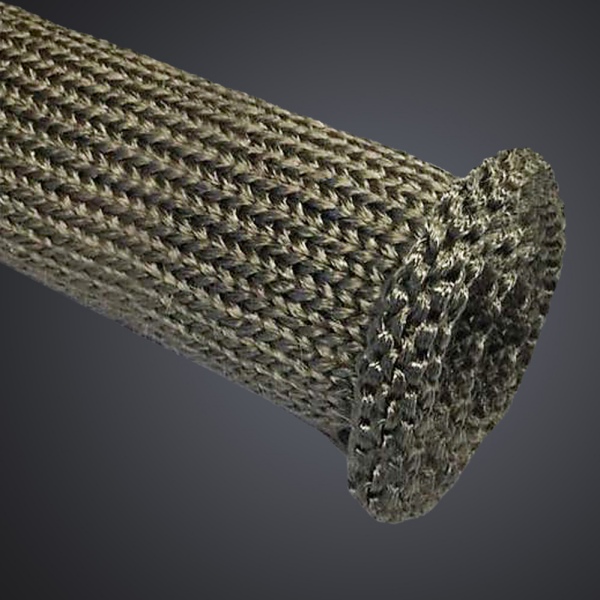
Un isolant de bouclier thermique d'échappement amovible système peut être fabriqué sous forme de segments individuels afin qu'une section puisse être retirée sans perturber le reste de la ligne d'échappement.
La réponse dépend fortement de la géométrie du collecteur.
Les tubes individuels du collecteur conviennent souvent bien à la bande d'échappement, car le ruban peut suivre chaque conduit.
Une couverture formée peut être plus pratique, car elle couvre le collecteur comme une seule zone thermique.
Cela est particulièrement utile pour :
les collecteurs de turbocompresseur ;
les collecteurs diesel compacts ;
les moteurs à usage intensif ;
les moteurs industriels.
BSTFLEX fabrique déjà des protections thermiques de collecteurs formées, notamment la couverture de collecteur en titane et des conceptions d'isolation de collecteurs associées.
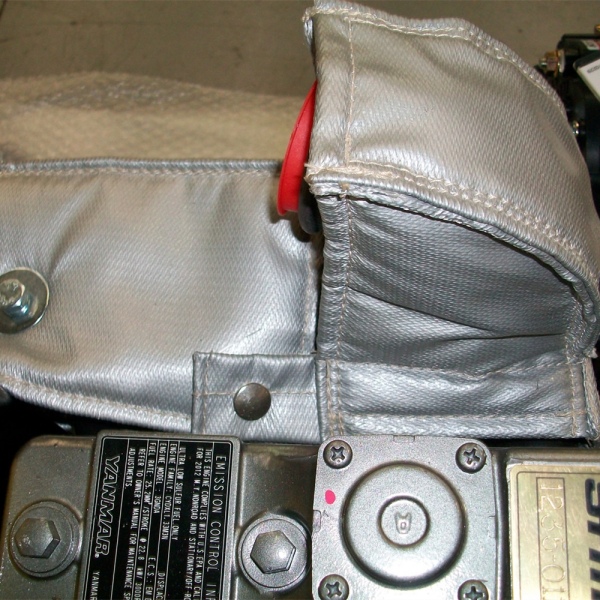
Pour un carter de turbine de turbocompresseur, une couverture ajustée est généralement beaucoup plus pratique qu'une bande d'échappement.
Les turbocompresseurs contiennent :
des carters courbés ;
des brides ;
des zones de soupape de décharge ;
des conduites d'huile ;
des raccords de liquide de refroidissement ;
des composants d'actionneur.
Ces caractéristiques rendent l'enroulement en spirale difficile.
Une couverture de turbocompresseur peut plutôt être façonnée autour du carter de turbine tout en laissant les raccordements nécessaires accessibles.
Pour les tubes d'échappement avant ou après le turbocompresseur, la bande peut encore être utile.
Cela illustre un principe important :
Le système de gestion thermique approprié peut utiliser à la fois des couvertures et des bandes sur le même ensemble d'échappement.
La maintenance est l'une des différences les plus évidentes.
Une couverture amovible peut normalement être :
détachée ;
retirée ;
inspectée ;
réinstallée.
Cela la rend adaptée aux équipements nécessitant un entretien régulier.
Les exemples typiques incluent :
groupes électrogènes ;
moteurs marins ;
moteurs industriels ;
équipements miniers ;
machines lourdes.
La bande est généralement considérée comme une installation semi-permanente.
Une fois retirée, il peut être difficile de la réinstaller avec la même tension et le même chevauchement.
Cela devient important lorsque les techniciens ont besoin d'un accès fréquent à :
soudures ;
brides ;
capteurs ;
raccords de tuyaux ;
connexions d'échappement.
Pour les machines nécessitant une maintenance intensive, un système de couverture segmentée peut considérablement simplifier l'accès.
Les systèmes d'échappement subissent des vibrations continues.
La pertinence de l'une ou l'autre méthode d'isolation dépend donc de la qualité de l'installation.
Une couverture sur mesure peut inclure :
bords renforcés ;
treillis en acier inoxydable ;
tissus extérieurs résistants à l'abrasion ;
coutures renforcées ;
maintien par ressorts ;
quincaillerie en acier inoxydable.
Cette construction peut être optimisée autour des zones de contact connues.
La bande isolante d'échappement repose principalement sur le textile lui-même et les attaches de maintien. Si le tuyau enveloppé entre en contact avec un autre composant, l'abrasion locale peut progressivement endommager les fibres.
Pour les installations où des frottements ou des vibrations importantes sont prévus, une protection mécanique doit être évaluée lors de la conception.
Les conditions environnementales peuvent être aussi importantes que la température.
Les applications peuvent impliquer :
pluie ;
projections de la route ;
sel ;
huile moteur ;
contamination par le carburant ;
humidité marine ;
fluides de nettoyage.
Les couvertures et les bandes doivent donc être sélectionnées en fonction de l'environnement réel.
Une couverture amovible offre un avantage pratique : elle peut être retirée afin que le composant d’échappement sous-jacent puisse être inspecté.
Avec un tuyau enveloppé de manière permanente, l’inspection du métal recouvert nécessite de retirer l’enveloppe.
Cela est particulièrement pertinent pour les programmes de maintenance marins et industriels.
Les systèmes d’échappement marins nécessitent souvent un accès pour l’inspection et la maintenance.
Les composants d’échappement marins secs peuvent inclure :
collecteurs ;
turbocompresseurs ;
colonnes montantes d’échappement ;
coudes ;
silencieux ;
tuyaux d’échappement de générateur.
Pour les composants de grande taille ou de forme irrégulière, les couvertures amovibles sont généralement plus faciles à concevoir et à entretenir.
L’enveloppe peut néanmoins être utile sur certaines sections tubulaires où une isolation continue est requise et où l’accès pour l’inspection est moins important.
La couche extérieure de la couverture et le système de fixation doivent être sélectionnés en tenant compte de l’environnement marin.
Les générateurs constituent une autre application où l’isolation amovible présente un avantage important.
Les systèmes d’échappement de générateurs peuvent contenir :
turbocompresseurs ;
collecteurs ;
raccords flexibles ;
coudes ;
tuyaux ;
silencieux.
Le personnel de maintenance peut avoir besoin d’accéder à ces composants pendant toute la durée de vie de l’équipement.
Un système de couverture par sections permet d’exposer des pièces individuelles sans retirer l’isolation de toute la ligne d’échappement.
L’enveloppe peut encore être utilisée sur certains tuyaux droits, mais elle est moins pratique autour des raccordements entretenus régulièrement.
Les applications automobiles sont plus variées.
L’enveloppe d’échappement fonctionne particulièrement bien pour :
collecteurs tubulaires ;
systèmes d’échappement de motos ;
tubes d’échappement personnalisés ;
installations de sport automobile ;
systèmes de performance de rechange.
Une couverture d’échappement est souvent préférée pour :
turbocompresseurs ;
collecteurs ;
tuyaux de descente ;
boîtiers de convertisseurs catalytiques ;
silencieux;
composants d'échappement irréguliers.
Les véhicules modernes peuvent également utiliser des écrans thermiques en métal formé autour des convertisseurs catalytiques et des sections d'échappement sous la carrosserie.
Par conséquent, couverture complète et bande d'enroulement ne doivent pas être considérées comme une décision exclusive pour un véhicule entier.
Différentes parties du système d'échappement peuvent nécessiter différentes méthodes de protection thermique.
L'installation typique nécessite :
mesurer la longueur de bande nécessaire ;
préparer le tuyau ;
enrouler avec une tension constante ;
maintenir le chevauchement requis ;
travailler soigneusement autour des courbures ;
installer des attaches ou des colliers en acier inoxydable.
La qualité de l'installation affecte directement le résultat final.
Une couverture personnalisée est généralement placée autour du composant ciblé et fixée avec son système de fixation intégré.
Cela peut réduire le temps d'installation pour les composants complexes.
Cependant, des dimensions correctes de la couverture sont importantes. Une couverture mal ajustée peut interférer avec les pièces adjacentes ou laisser des espaces indésirables.
C'est pourquoi la fabrication de couvertures personnalisées commence normalement par des informations dimensionnelles précises.
La bande thermique d'échappement présente généralement un coût initial de matériau inférieur.
Cela la rend intéressante pour :
les véhicules individuels ;
les motos ;
les prototypes ;
les projets de performance à petit budget ;
les systèmes tubulaires simples.
Une couverture personnalisée a un coût de fabrication plus élevé car elle nécessite :
le développement du patron ;
la découpe ;
l'assemblage de l'isolation ;
la couture ;
le renforcement ;
le matériel de fixation.
Cependant, le prix initial n'est qu'un élément du coût total.
Pour les équipements commerciaux, d'autres facteurs incluent :
la main-d'œuvre d'installation ;
le temps de retrait ;
la fréquence de remplacement ;
accès de maintenance;
temps d'arrêt de l'équipement.
Pour les équipements nécessitant un entretien répété, la possibilité de retirer et de réinstaller une couverture peut compenser une partie du coût initial plus élevé.
C'est un autre domaine dans lequel les couvertures diffèrent considérablement des enveloppes.
L'enveloppe d'échappement est principalement personnalisée en choisissant :
largeur;
épaisseur;
matériau;
couleur;
longueur du rouleau.
Une couverture d'échappement personnalisée peut en outre être conçue autour de :
la géométrie exacte du composant;
brides;
supports;
ports de capteurs;
ouvertures d'inspection;
passages de tuyaux;
emplacements des fixations;
épaisseur d'isolation;
matériau extérieur;
matériau côté chaud.
BSTFLEX peut développer des couvertures d'isolation d'échappement personnalisées à partir de dessins, de géométries CAO, de dimensions ou d'échantillons physiques.
Pour la production d'équipementiers, la décision doit être basée sur la répétabilité de l'assemblage et les exigences du cycle de vie.
le composant est principalement tubulaire;
le coût de fabrication doit être réduit au minimum;
l'accès pour l'entretien est peu fréquent;
l'installation peut être standardisée;
le développement de motifs complexes n'est pas nécessaire.
le composant présente une géométrie irrégulière;
l'épaisseur d'isolation doit être contrôlée;
des retraits répétés sont prévus;
les techniciens ont besoin d'un accès facile;
différentes zones thermiques nécessitent différentes épaisseurs d'isolation;
l'isolation doit avoir un aspect uniforme entre les unités de production.
Un équipementier d'origine (OEM) peut également spécifier les deux systèmes.
Par exemple :
Tubulures de collecteur :bande isolante pour échappement
Turbocompresseur :couverture amovible
Descente d'échappement :couverture ajustée
Long tube d'échappement :bande isolante ou gaine de tube
Convertisseur catalytique :écran thermique métallique
Cette approche au niveau du système est souvent plus efficace que de sélectionner une seule technologie d'isolation pour chaque composant.
| Application | Meilleur choix habituel | Pourquoi |
|---|---|---|
| Boîtier de turbocompresseur | Couverture d'échappement | Géométrie complexe et possibilité de retrait |
| Collecteur d'échappement moulé | Couverture d'échappement | Couverture isolante façonnée |
| Tubulures de collecteur tubulaires | Bande isolante d'échappement | Suit facilement les tubes individuels |
| Long tuyau d'échappement droit | Bande isolante d'échappement ou couverture | Dépend des exigences de service |
| Échappement de générateur | Couverture d'échappement | Accès pour la maintenance |
| Échappement sec marin | Couverture d'échappement | Isolation sectionnelle amovible |
| Échappement de moto | Bande isolante d'échappement | Géométrie tubulaire compacte |
| Grand silencieux | Couverture d'échappement | Meilleure couverture d'une grande surface |
| Coude d'échappement | Couverture façonnée | Géométrie complexe |
| Collecteur de compétition automobile | Gaine d'échappement | Couverture continue légère |
| Moteur industriel | Couverture d'échappement | Isolation technique reproductible |
| Tube d'échappement prototype | Gaine d'échappement | Rapide et économique |
Oui.
Dans de nombreuses applications, c'est la solution la plus pratique.
Prenons l'exemple d'un moteur turbocompressé :
les tubes du collecteur peuvent utiliser une gaine ;
le turbocompresseur peut utiliser une couverture adaptée ;
le tube de descente peut utiliser soit une couverture, soit une gaine ;
le convertisseur catalytique peut utiliser un écran thermique métallique.
Chaque composant présente des différences en matière de :
température ;
géométrie ;
flux d'air ;
vibrations ;
espace disponible ;
exigences de maintenance.
La gestion thermique doit donc être conçue composant par composant plutôt que de sélectionner un matériau isolant universel.
Aucune des deux n'est universellement meilleure. Les couvertures d'échappement sont généralement plus adaptées aux composants complexes, aux isolations amovibles et aux équipements nécessitant une maintenance. Les gaines d'échappement sont souvent plus adaptées aux tubes continus, aux collecteurs tubulaires et aux installations où un confinement thermique simple et économique est requis.
Oui. La gaine d'échappement est spécialement conçue pour les composants d'échappement tubulaires et peut être efficace sur les collecteurs, les tubes de descente et les tubes d'échappement lorsqu'elle est correctement installée.
Une couverture amovible correctement fabriquée peut généralement être retirée pour inspection puis réinstallée, à condition que la couverture et le système de fixation restent en état de fonctionnement.
Une couverture de turbocompresseur adaptée est normalement plus appropriée, car elle peut épouser la géométrie du carter de turbine tout en laissant les conduites d'huile, les conduites de liquide de refroidissement et les autres raccordements accessibles.
Les couvertures d'échappement amovibles sont souvent privilégiées, car les composants d'échappement des générateurs nécessitent des inspections et des opérations de maintenance périodiques.
La bande isolante pour échappement a généralement un coût initial de matériau inférieur. Les couvertures sur mesure coûtent plus cher à fabriquer, mais peuvent offrir des avantages en matière d’installation reproductible et d’accès pour la maintenance.
Oui. Différentes sections d’un même système d’échappement peuvent utiliser différentes technologies d’isolation en fonction de la géométrie, de la température et des exigences de maintenance.
Les informations utiles comprennent les plans ou dimensions des composants, la température de fonctionnement, des photographies, l’espace disponible pour l’isolation, l’environnement d’utilisation et la quantité requise.
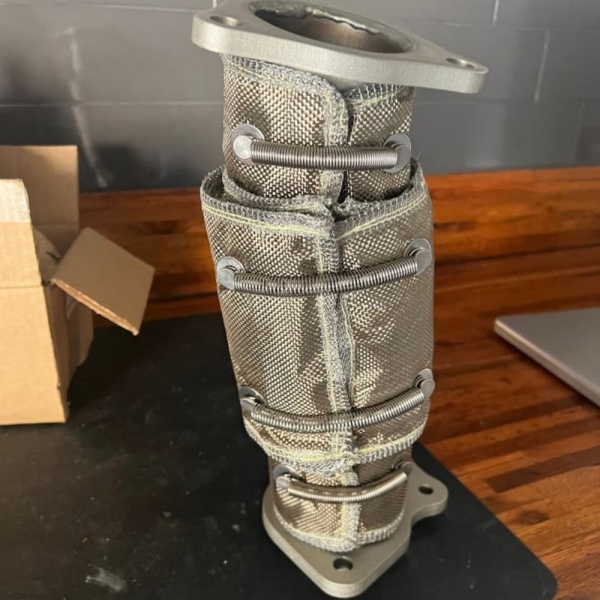
Pour les systèmes d’échappement tubulaires simples, la bande isolante pour échappement reste une méthode pratique et économique de contrôle de la chaleur.
Pour les composants complexes, les équipements à forte sollicitation et les installations nécessitant une maintenance régulière, une couverture isolante pour échappement sur mesure offre généralement un meilleur contrôle de l’épaisseur de l’isolation, de l’ajustement et de la facilité de maintenance.
Le choix approprié dépend donc moins du produit théoriquement « meilleur » que de la manière dont le composant d’échappement est conçu et utilisé.
BSTFLEX fabrique à la fois des solutions d’isolation des échappements et de protection thermique et des bandes thermiques pour collecteurs d’échappement pour les applications automobiles, marines, diesel, de groupes électrogènes et industrielles.
Pour un projet de couverture isolante sur mesure, fournissez les plans des composants, les dimensions, la température de fonctionnement, des photographies de l’installation et la quantité estimée. BSTFLEX peut évaluer si une couverture isolante pour échappement amovible, une bande isolante pour échappement, un écran thermique métallique ou une combinaison de ces technologies constitue la solution la plus appropriée.

No.10, Chuangxin North Road, Nanshan Park, Ningguo Economic and Technological Development Zone, Ningguo City, Anhui Province, China
tél/Whatsapp : 0086-15856303740
e-mail : sales@bstbraidedsleeve.com
Skype : vanesa-cheng