que cherchez-vous?
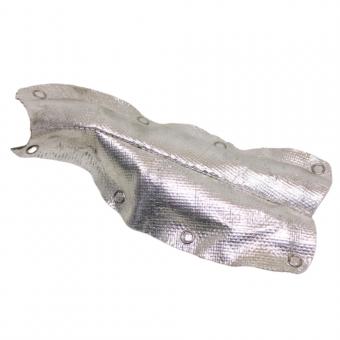
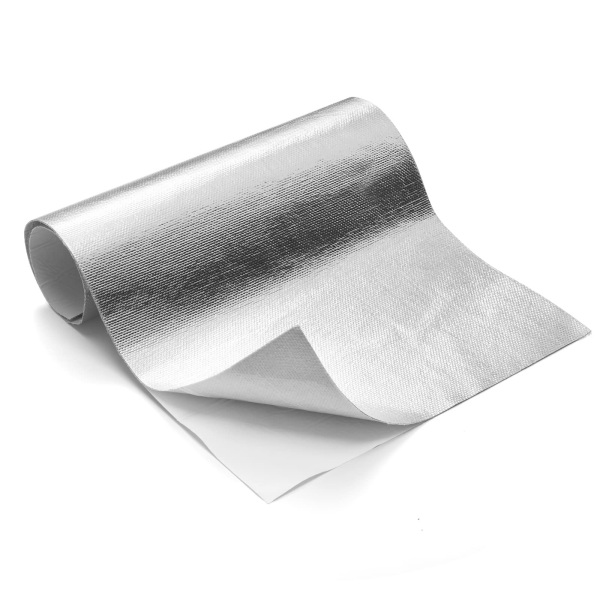
A peel and stick heat shield is a flexible thermal barrier with a pressure-sensitive adhesive backing that allows the material to be bonded directly to a panel or other suitable surface. In automotive applications, this construction is commonly used where exhaust components, turbochargers, catalytic converters, transmission systems or other hot components create radiant heat near the vehicle body or sensitive equipment.
The convenience of an adhesive backing does not mean every self adhesive heat shield can be installed in every hot location. The reflective surface, insulation layer, adhesive and mounting substrate each operate under different conditions. Successful selection therefore depends on where the shield is installed, how hot the bonded surface becomes, the available clearance from the heat source, and the mechanical environment around the part.
BSTFLEX supplies several heat barrier materials and adhesive backed heat shields for automotive and industrial thermal management, including fiberglass, silica and thin reflective constructions.
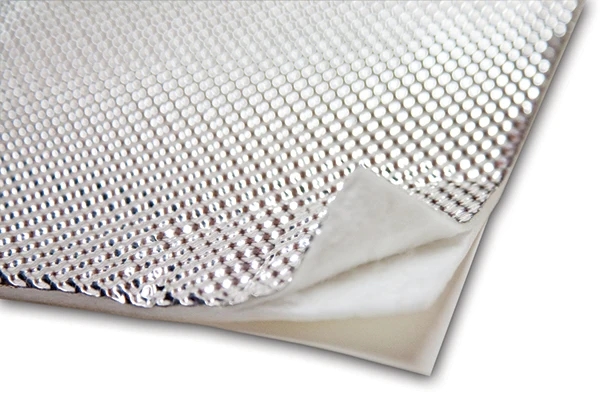
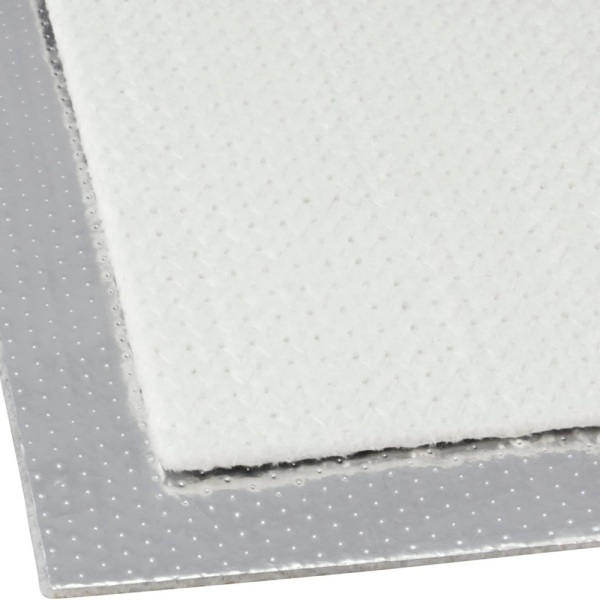
A peel and stick heat shield normally combines three functional elements:
This design is different from a rigid stamped metal heat shield. A rigid shield is normally mounted with brackets or fasteners and may intentionally create an air gap. An adhesive backed heat shield is attached directly to the protected surface, making it useful where installation space is limited or where a lightweight conformable barrier is required.
It is also different from exhaust wrap or exhaust insulation. A peel and stick heat barrier is generally installed on the component that needs protection from a nearby heat source rather than wrapped directly around the hot exhaust pipe.
The best applications are locations where radiant heat reaches a nearby panel but the shield itself can be bonded to a suitable surface. Typical automotive locations include the following.
A firewall can receive significant radiant heat from exhaust manifolds, turbochargers, downpipes or engine components. An adhesive backed heat shield can be applied to an appropriate side of the firewall to reduce radiant heat reaching the passenger compartment or nearby components.
Before specifying the material, determine which side of the firewall will receive the shield, the distance from the heat source and the actual temperature of the mounting surface.
Exhaust pipes, catalytic converters and transmission components can create a concentrated thermal zone around the transmission tunnel. A flexible peel and stick heat shield can follow the shape of the tunnel more easily than some rigid sheet materials.
The underside of a vehicle, however, can also experience water, road debris, vibration and airflow. Adhesive selection and edge retention therefore become particularly important in this location.
Floor pans positioned above exhaust systems, mufflers, catalytic converters or other hot components are another common application. The objective is normally to limit heat transfer toward the cabin or protect temperature-sensitive coatings and interior components.
For exposed underbody installations, do not select a heat shield only by its temperature rating. Check whether the adhesive, edges and outer reflective layer are suitable for the expected mechanical and environmental exposure.
Thin adhesive backed reflective sheets are useful where radiant heat affects under-hood panels, bulkheads, air boxes, intake areas or other localized hot zones.
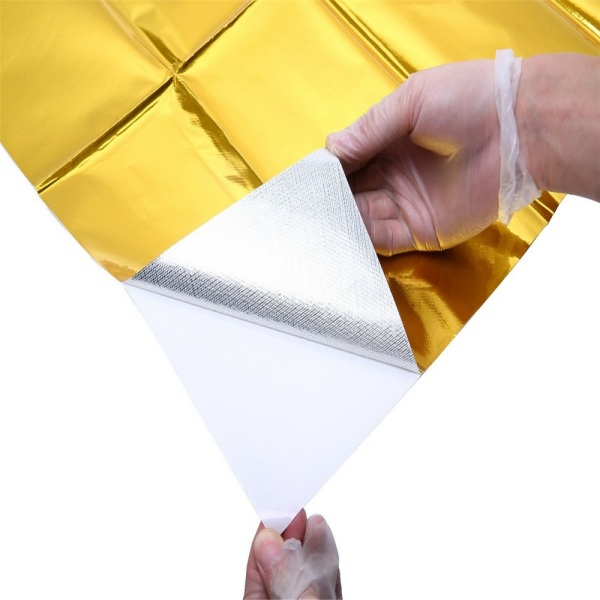
For compact engine bay applications where a thin reflective construction is preferred, BSTFLEX offers an adhesive backed gold heat reflective sheet. The material uses a reflective gold face, fiberglass reinforcement and pressure-sensitive adhesive for installation on properly prepared surfaces.
When exhaust routing passes close to a fuel tank, fuel cell or adjacent body panel, an adhesive heat barrier may be installed on the protected surface to reduce radiant heat exposure.
Fuel-system applications require particular attention to installation position, adhesive compatibility, fluid exposure and mechanical retention. The heat shield must not interfere with inspection, drainage, fuel lines, mounting hardware or service access.
Radiant heat from exhaust manifolds, turbochargers and other hot-side components can heat nearby intake-system surfaces. A lightweight reflective sheet can be used on suitable air-box panels or surrounding barriers where reducing radiant heat loading is the objective.
The presence of a high-temperature reflective surface does not make an adhesive backed barrier suitable for direct installation on every heat source.
A peel and stick heat shield should not automatically be applied directly to an exhaust manifold, turbocharger housing, catalytic converter or exhaust pipe. Those components can create temperatures substantially different from the temperature measured on a nearby body panel.
If the objective is to insulate the exhaust component itself, review exhaust heat shield insulation, exhaust wraps or component-specific insulation instead of assuming that a panel-mounted adhesive barrier is interchangeable with direct exhaust insulation.
One of the most common specification errors is to look at the temperature capability of the reflective face or fiber substrate and assume that the adhesive has the same temperature rating.
It usually does not.
A heat shield assembly can contain several materials with different operating limits:
| Part of the heat shield | What must be evaluated |
|---|---|
| Reflective face | Radiant exposure, oxidation, surface damage and orientation toward the heat source |
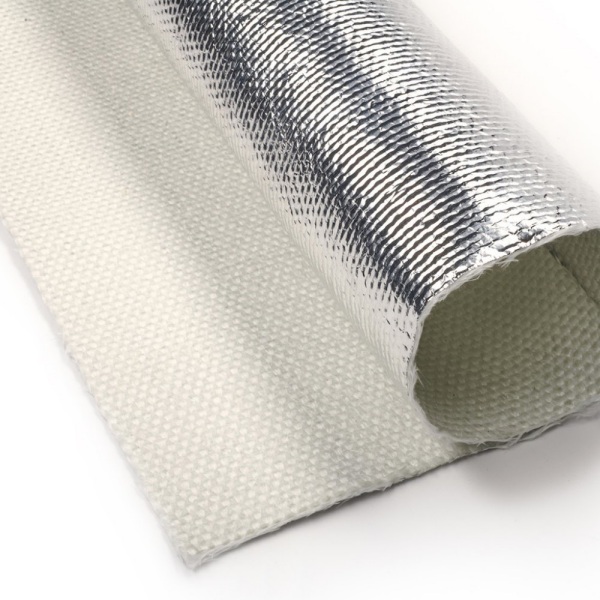
| Fiberglass or silica substrate | Fiber temperature capability, thickness and structural integrity |
| Lamination system | Temperature cycling and bond stability between layers |
| Pressure-sensitive adhesive | Actual bond-line temperature, substrate compatibility and long-term adhesion |
| Protected panel | Surface temperature, coating condition, cleanliness and mechanical environment |
The specification that matters for the adhesive is therefore the expected temperature at the bond line, not simply the temperature of the exhaust pipe several centimeters away.
Before selecting an adhesive backed heat shield, evaluate the following conditions.
Determine the maximum continuous and peak temperature of the surface to which the material will actually be bonded. Do not substitute the exhaust gas temperature, manifold temperature or reflective-face rating for this value.
If the expected mounting-surface temperature is close to or above the adhesive limit, consider increasing the clearance, using a different heat shield construction or adding mechanical retention.
Pressure-sensitive adhesives can behave differently on painted steel, bare aluminum, stainless steel, composites, plastics and textured coatings. The condition of the surface is just as important as its material.
Oil, silicone residue, dust, corrosion, moisture or loose paint can reduce adhesion even when the adhesive itself is technically suitable for the operating temperature.
Flat or gently curved surfaces generally provide a larger continuous bonding area. Sharp bends, deep ribs and compound curves can create stress at the adhesive interface and increase the risk of edge lift.
For complicated geometries, test-fit the material before removing the release liner. Custom cut or die-cut parts may provide more repeatable installation than trimming a large rectangular sheet during assembly.
Automotive applications are rarely static. Engine vibration, road input and drivetrain movement can load the edges of an adhesive heat shield over thousands of thermal cycles.
In severe vibration areas, consider rounded corners, protected leading edges, edge sealing or additional mechanical retention where appropriate.
An under-hood installation and an exposed underbody installation have very different service environments. Road splash, oil mist, coolant, fuel contamination and cleaning chemicals can affect long-term bonding.
When these exposures are expected, identify them during material selection rather than treating adhesive performance as a temperature-only specification.
The substrate is another important part of the selection process.
For general automotive and industrial radiant heat shielding, an adhesive backed aluminum heat shield mat provides a reflective aluminum surface, fiberglass layer and self-adhesive backing.
This type of construction can be considered for engine compartments, vehicle panels and other locations where flexible cut-to-fit installation is required.
Where a silica substrate is preferred, BSTFLEX supplies an adhesive backed aluminum silica heat shield barrier. The product combines an aluminized reflective surface with woven silica and an adhesive-backed construction.
Silica and fiberglass products should not be selected solely by the highest fiber temperature number. The complete installed assembly, including adhesive and laminate construction, must remain suitable for the real service temperature.
Where space is limited and a thinner reflective layer is desirable, an adhesive backed gold heat reflective sheet can be considered for under-hood panels, firewalls, bulkheads and localized radiant heat zones.
This construction is different from a thicker fiberglass or silica insulation mat. Material choice should therefore start with the application rather than appearance alone.
Reflective heat barriers primarily manage radiant heat, and installation geometry strongly affects their performance. In general, a reflective face works most effectively when it faces the heat source and is not pressed directly against that source.
The required clearance cannot be reduced to one universal number because heat-source temperature, airflow, shield construction, exposure time and protected-side temperature all matter.
For an OEM or industrial project, provide the minimum available distance between the hot component and the heat shield so that the installation can be evaluated as a system.
Loss of adhesion is not always caused by a defective adhesive. Common causes include:
This is why adhesive selection should be part of the heat shield specification rather than an afterthought during installation.
| Selection factor | Peel and stick heat shield | Mechanically mounted shield |
|---|---|---|
| Installation | Pressure-sensitive adhesive | Fasteners, clips, brackets or standoffs |
| Space requirement | Useful where installation space is limited | Can intentionally create an air gap |
| Complex shapes | Flexible materials can conform to many panels | Requires formed geometry or designed mounting points |
| Main selection concern | Adhesive temperature and surface condition | Mounting geometry, clearance and fastener durability |
Neither design is universally better. The correct construction depends on packaging space, heat flux, temperature, installation surface, durability requirements and production method.
For an automotive, equipment or industrial project, provide more than a request for a "high temperature adhesive heat shield." A useful RFQ should include:
For custom projects, BSTFLEX can review sheet material as well as cut-to-size and die-cut heat barrier requirements. Visit our Thermal & Heat Shield Barrier range to compare available material constructions.
Not automatically. Most adhesive-backed panel barriers are intended to protect a nearby surface rather than serve as direct exhaust-pipe insulation. Verify the product construction and bond-line temperature before any direct-contact application.
No. The reflective face, fiber substrate, laminate and pressure-sensitive adhesive can have different temperature limits. The adhesive should be selected according to the actual temperature of the mounting surface.
Some constructions can be considered for floor pans and other underbody panels, but road splash, dirt, vibration, airflow, abrasion and exposed edges must be evaluated. Severe environments may require edge protection or mechanical retention.
For reflective radiant heat barrier constructions, the reflective face is normally oriented toward the radiant heat source. Always confirm the installation requirement for the specific material.
Yes. Custom sheet dimensions, cut parts and die-cut heat barrier components can be reviewed against drawings, templates and production requirements. Material choice, adhesive construction and conversion method are confirmed for the individual project.
A peel and stick heat shield should be selected as a complete thermal assembly rather than by adhesive convenience alone. Start with the heat source and installation geometry, determine the temperature at the mounting surface, evaluate the environment, and then choose the reflective material, thermal substrate and adhesive construction.
BSTFLEX supplies adhesive backed aluminum fiberglass heat shield mats, adhesive backed aluminum silica heat barriers, gold heat reflective sheets and other automotive heat barrier materials.
Need help choosing the construction? Send the installation location, heat-source temperature, mounting-surface temperature, clearance, dimensions and required quantity through our contact page for material review and quotation.

No.10, Chuangxin North Road, Nanshan Park, Ningguo Economic and Technological Development Zone, Ningguo City, Anhui Province, China
tél/Whatsapp : 0086-15856303740
e-mail : sales@bstbraidedsleeve.com
Skype : vanesa-cheng