que cherchez-vous?
Choisir l'épaisseur adéquate d'une tôle de protection thermique en acier inoxydable gaufré est une décision cruciale lors de la conception et de la fabrication d'un écran thermique. L'épaisseur influe sur la rigidité, le poids, la formabilité, la résistance aux vibrations, la stabilité lors de l'installation et la durabilité à long terme dans des environnements thermiques d'échappement réels. Une tôle trop fine risque de ne pas offrir une stabilité structurelle suffisante pour certaines applications, tandis qu'une tôle trop épaisse peut engendrer un poids inutile ou limiter la flexibilité de formage pour les configurations compactes.
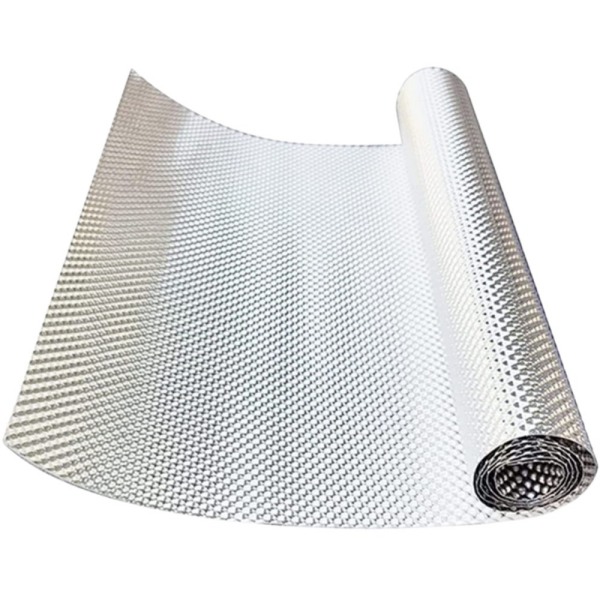
Chez BSTFLEX, notre Feuille de barrière thermique en acier inoxydable gaufré Il est largement utilisé pour les écrans thermiques d'échappement, les barrières thermiques de turbocompresseur, les écrans de convertisseur catalytique, les écrans de silencieux, les barrières de tablier et la protection thermique du soubassement. Les épaisseurs les plus demandées sont : 0,1 mm , 0,15 mm , et 0,2 mm , qui couvrent de nombreux besoins courants en matière de fabrication de boucliers thermiques pour l'automobile et l'industrie.
L'épaisseur n'est pas qu'une simple dimension. Elle influe directement sur le comportement du matériau de protection thermique lors de la découpe, du pliage, de l'emboutissage, du formage, de l'installation et de son utilisation à long terme. Dans les applications automobiles et d'échappement, une plaque de protection thermique doit souvent résister aux vibrations, aux cycles thermiques répétés, aux flux d'air et aux contraintes d'installation, tout en conservant la géométrie prévue autour de la source de chaleur.
Lors du choix de l'épaisseur d'une tôle d'acier inoxydable gaufrée, la décision doit se fonder sur l'environnement d'application global et non uniquement sur le coût du matériau. Une épaisseur adéquate permet d'optimiser les performances, l'efficacité de la fabrication et la durée de vie.
Les plaques plus épaisses offrent généralement une meilleure rigidité structurelle. Ceci est utile lorsque le bouclier thermique doit conserver sa forme sur une grande surface, résister aux vibrations ou maintenir un espace d'air plus stable à proximité des composants d'échappement.
Les feuilles plus fines sont souvent plus faciles à découper, à plier et à façonner, notamment pour les pièces compactes ou complexes. Si la pièce nécessite des pliages serrés ou un formage précis, une épaisseur plus faible peut s'avérer plus pratique.
L'utilisation de tôles d'acier inoxydable plus fines permet de réduire le poids total des pièces. Ceci peut s'avérer important pour les applications automobiles de performance, de compétition ou celles où le poids est un facteur critique.
Dans certains cas, une tôle gaufrée plus épaisse offre une meilleure durabilité pour les écrans de grande taille ou les zones d'installation plus exigeantes. Cependant, il n'est pas toujours judicieux d'opter pour l'épaisseur maximale. Le choix optimal dépend de la fabrication et de l'utilisation prévues de la pièce.
Lorsqu'un écran thermique est installé à proximité de tuyaux d'échappement, de turbocompresseurs, de convertisseurs catalytiques ou de silencieux, sa stabilité est primordiale. Son épaisseur influe sur sa résistance à la déformation après installation et lors de cycles répétés de chauffage et de refroidissement.
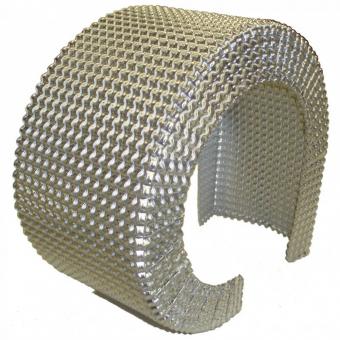
Le gaufrage améliore la rigidité de la tôle en structurant sa surface. Ainsi, une tôle d'acier inoxydable gaufrée offre souvent une meilleure rigidité qu'une tôle plate de même épaisseur. Par conséquent, le choix de l'épaisseur ne doit pas être considéré isolément. La conception du motif et la profondeur de gaufrage influent également sur le comportement de la pièce finale.
Si la tôle présente un motif en relief efficace, une épaisseur réduite peut suffire à assurer une rigidité suffisante dans certaines applications. En revanche, pour les pièces de grande taille, très exposées ou nécessitant une meilleure stabilité dimensionnelle, une tôle plus épaisse peut s'avérer plus judicieuse. Supports BSTFLEX tôle d'acier inoxydable gaufrée personnalisée production avec de multiples options de moules de gaufrage existantes pour répondre aux exigences de différents projets.
La méthode la plus pratique pour choisir l'épaisseur consiste à adapter la tôle à l'environnement d'application, à la taille de la pièce, à la méthode de formage et à l'objectif de performance.
0,1 mm Ce matériau est souvent privilégié lorsque la légèreté et la facilité de mise en forme sont des critères essentiels. Il convient aux structures de protection thermique plus légères, aux exigences de fabrication plus flexibles et aux applications où la pièce ne requiert pas une rigidité maximale.
Raisons typiques de choisir 0,1 mm :
Cette épaisseur est souvent pratique pour les barrières profilées de petite taille, les configurations de blindage légères et certaines applications personnalisées où la flexibilité est plus importante que la résistance structurelle maximale.
0,15 mm Cette épaisseur est souvent le choix le plus équilibré pour la fabrication de boucliers thermiques. Elle offre une combinaison pratique de rigidité, de formabilité, de durabilité et de poids raisonnable. Pour de nombreux projets de boucliers thermiques d'échappement, cette épaisseur représente un excellent compromis.
Raisons typiques de choisir 0,15 mm :
Pour de nombreuses applications de type OEM et de rechange, 0,15 mm est un choix pratique et efficace.
0,2 mm Ce matériau est généralement choisi lorsqu'une rigidité et une stabilité structurelle accrues sont requises. Il est particulièrement adapté aux écrans de grande taille, aux applications soumises à des vibrations importantes ou aux pièces devant conserver leur forme de manière plus rigoureuse dans le temps.
Raisons typiques de choisir 0,2 mm :
Cette épaisseur peut être privilégiée pour des conceptions de blindage structurel plus robustes, à condition que le projet puisse supporter le poids supplémentaire et la flexibilité réduite par rapport aux options plus minces.
| Épaisseur | Principal avantage | Idéal pour | Caractère général |
|---|---|---|---|
| 0,1 mm | Plus léger et plus facile à mouler | Pièces plus petites, fabrication flexible, conceptions sensibles au poids | Plus flexible |
| 0,15 mm | Rigidité et formabilité équilibrées | Fabrication générale de boucliers thermiques d'échappement | Le plus polyvalent |
| 0,2 mm | Rigidité accrue et meilleure tenue de forme | Des boucliers plus grands, des structures plus robustes, une demande de stabilité accrue | Plus rigide |
Avant de choisir entre 0,1 mm, 0,15 mm et 0,2 mm, il est utile de se poser les questions suivantes :
Ces questions permettent de déterminer si le choix doit privilégier une plus grande facilité de mise en forme ou une plus grande rigidité.
Pour le blindage des tuyaux d'échappement, l'épaisseur doit être choisie en fonction de la taille de la pièce, du mode de fixation et de l'exposition aux vibrations. Les blindages de petite taille peuvent être plus fins, tandis que les blindages plus grands ou plus exposés nécessiteront une tôle plus épaisse.
Les applications en zone turbocompressée impliquent souvent des températures plus élevées et un espace d'installation plus restreint. Le choix de l'épaisseur doit tenir compte à la fois de l'intensité de la chaleur et de la nécessité d'une fabrication sur mesure. Dans certains environnements à très haute température, une solution en alliage de qualité supérieure, telle que… Écran thermique en alliage 625 Inconel peut également être plus approprié.
La protection des pots catalytiques nécessite souvent une barrière stable et durable, conservant bien sa forme. Son épaisseur doit être adaptée à la taille de la protection et à sa structure de fixation.
Pour les grandes surfaces à couvrir, comme les panneaux de pare-feu ou les protections de soubassement, la rigidité et la stabilité des panneaux deviennent primordiales. Une épaisseur équilibrée ou plus importante est souvent privilégiée, selon la géométrie et la structure de support.
L'épaisseur doit également correspondre au plan de fabrication. Si la tôle est destinée à être découpée et fournie telle quelle, le choix peut différer d'un projet où elle doit être emboutie, pliée ou transformée en pièces finies. BSTFLEX propose un développement sur mesure de tôles barrières thermiques en acier inoxydable gaufré, à partir de plans, d'échantillons, de dimensions ou d'exigences d'application.
Notre Feuille de barrière thermique en acier inoxydable gaufré est disponible pour la fourniture de feuilles ou la fabrication sur mesure de boucliers thermiques, avec de multiples options de moules de gaufrage pour répondre à différents objectifs de rigidité et de formabilité.
L'épaisseur optimale des tôles de protection thermique en acier inoxydable gaufré dépend de l'équilibre entre rigidité, formabilité, poids, environnement d'application et exigences de durée de vie. Dans de nombreux projets, 0,1 mm , 0,15 mm , et 0,2 mm Chacune a un rôle bien défini. Une tôle plus fine sera plus adaptée aux pièces plus légères ou aux formes plus complexes, tandis qu'une tôle plus épaisse sera plus adaptée aux structures plus robustes et aux blindages plus grands.
Si vous choisissez des matériaux pour la fabrication d'échappements, de turbocompresseurs, de convertisseurs catalytiques, de tabliers pare-feu ou de protections thermiques de soubassement, BSTFLEX peut vous aider à faire le bon choix. feuille de barrière thermique en acier inoxydable L'épaisseur dépend de la conception de votre pièce, du motif de gaufrage et des exigences d'application.
Pour de nombreuses applications, une épaisseur de 0,15 mm constitue un choix intermédiaire pratique car elle offre une combinaison équilibrée de rigidité, de formabilité et de poids gérable.
Une épaisseur de 0,1 mm est souvent appropriée lorsque le projet nécessite une mise en forme plus facile, un poids plus faible et une rigidité suffisante grâce à une conception de motif en relief plutôt qu'à un matériau plus épais uniquement.
On choisit souvent une épaisseur de 0,2 mm lorsque le blindage nécessite une plus grande rigidité, une meilleure tenue de forme ou une meilleure stabilité structurelle dans des applications plus grandes ou plus exigeantes.
Dans certains cas, oui. Le gaufrage améliore la rigidité ; une tôle gaufrée peut donc offrir une meilleure rigidité qu’une tôle plate de même épaisseur. Le choix final dépend toutefois de l’application et de la conception de la pièce.
Oui. BSTFLEX peut recommander une épaisseur adaptée en fonction du lieu d'application, de la taille de la pièce, du motif de gaufrage, de la méthode de formage et des performances recherchées.

No.10, Chuangxin North Road, Nanshan Park, Ningguo Economic and Technological Development Zone, Ningguo City, Anhui Province, China
tél/Whatsapp : 0086-15856303740
e-mail : sales@bstbraidedsleeve.com
Skype : vanesa-cheng