que cherchez-vous?
Heat shield sheet and heat shield mat are often used as overlapping product names, but they do not always describe the same construction. A thin reflective laminate, a woven fiberglass barrier and a thicker thermal mat can all be sold for radiant heat protection while behaving very differently during cutting, bonding and installation.
For an OEM buyer, the more useful question is not whether the supplier calls the product a sheet or a mat. The specification should identify the reflective facing, substrate, thickness, backing and finished supply form. Those details determine whether the material can be bonded to a panel, formed around a contour or converted into a repeatable custom part.
BSTFLEX supplies heat shield sheets, thermal barrier mats and reflective heat barrier materials for automotive and industrial applications. This guide explains how to choose the appropriate format without relying on the product name alone.
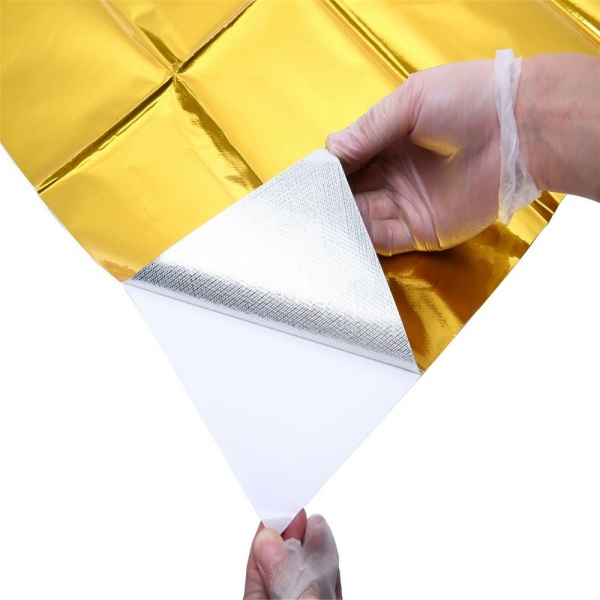
A heat shield sheet is generally understood as a relatively thin, flexible material supplied as a flat sheet or roll. Many constructions use an aluminum or metallized reflective surface with a reinforcing textile and, in some versions, pressure-sensitive adhesive.
Sheets are useful where the installation requires:
The BSTFLEX adhesive-backed aluminum heat reflective sheet is an example of this type of product format. The construction combines a reflective face with a reinforcing layer and adhesive backing for installation on a suitable surface.
A gold heat reflective sheet provides another thin reflective format. Its color and facing construction differ from an aluminum-faced sheet, but the purchasing questions remain similar: thickness, facing, backing, adhesive limits and finished dimensions must all be confirmed.
A heat shield mat normally suggests a thicker or more textile-based construction. It may use fiberglass, silica, volcanic-rock fiber or another insulating substrate beneath a reflective surface.
Mats are often considered where the project requires:
The adhesive-backed aluminum heat shield mat uses an aluminum reflective face, fiberglass layer and adhesive backing. The aluminum silica thermal barrier mat uses a silica textile substrate beneath its reflective facing.
The word mat therefore does not describe one material. It describes a product format that still needs a complete construction specification.
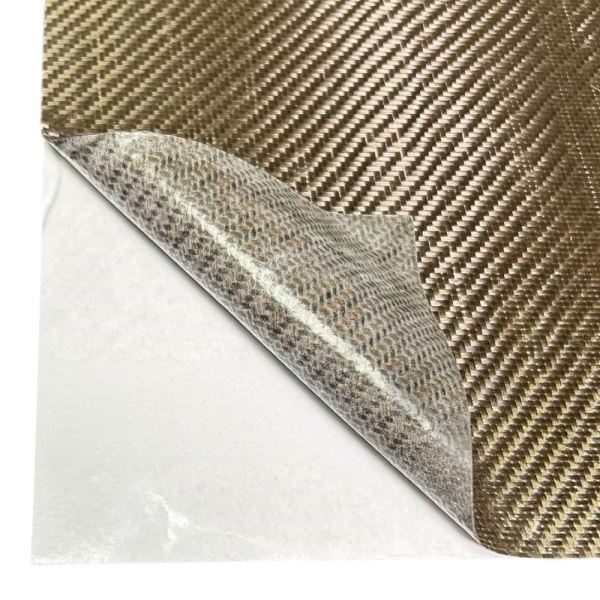
Thickness is one of the first differences to review. A thin reflective sheet occupies less installation space, while a thicker mat may add a more substantial fibrous layer between the heat source and protected surface.
Do not assume that thicker automatically means better. Additional thickness can reduce available clearance around exhaust components, brackets, covers or moving assemblies. It can also change the way a flexible material follows a panel.
Define:
A mat specified at one nominal thickness may perform differently when compressed beneath a cover. The purchasing drawing should therefore state the required finished condition rather than listing a catalog thickness without installation context.
Both sheets and mats can be flexible, but they do not necessarily conform in the same way.
A thin heat reflective sheet may follow gentle panel curvature with limited build-up. A textile mat may tolerate more local movement but can bridge tight recesses or create additional thickness at folds.
When the protected panel contains ribs, pressed shapes or compound curvature, perform a fit trial before releasing the production pattern. Check whether the reflective surface remains intact and whether the material returns from the contour instead of remaining in contact with the receiving surface.
Do not use aggressive folding simply to force a material into place. A sharp crease can damage a reflective facing or laminate even when the textile backing remains intact.
A heat shield sheet or mat may be supplied with or without pressure-sensitive adhesive. The format name does not define the backing.
For adhesive installation, review four separate items:
The operating temperature of the fiber is not automatically the allowable temperature of the adhesive interface. The mounting surface, coating, contamination, installation pressure and thermal cycle all affect the bond.
For more detail, see Peel and Stick Heat Shield: Where to Use It and How to Choose the Adhesive.
This distinction is more useful than the words sheet and mat.
Reflective barriers are designed primarily to manage radiant heat reaching a nearby surface. Their exposed reflective face is normally oriented toward the radiant source.
Insulating layers add thermal resistance through the material thickness and can affect conductive and convective heat transfer within the assembly.
Many automotive products combine both functions. An aluminum-faced fiberglass mat, for example, includes a reflective surface and a fibrous layer. It should therefore be specified as a complete composite rather than described only as aluminum foil or fiberglass.
Do not compare two materials solely by asking which reflects more heat. If one candidate is substantially thicker, uses a different substrate or is installed with a different clearance, the finished performance depends on more than the reflective surface.
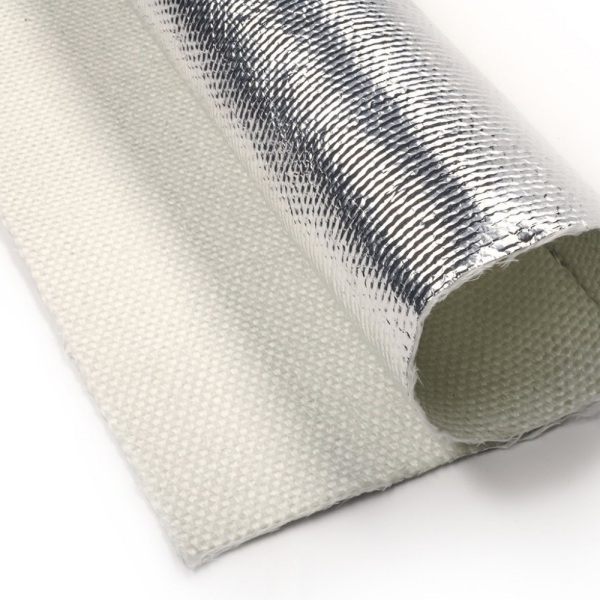
Fiberglass is widely used as a backing or insulating layer in flexible heat barrier constructions. It can be combined with an aluminum-facing layer and optional adhesive backing.
The BSTFLEX aluminized fiberglass heat shield barrier mat provides one fiberglass-based option for automotive and industrial panel protection.
When specifying fiberglass, identify:
Do not select the material using a fiber temperature figure alone. The complete laminate and attachment must remain suitable for the actual installation.
Silica-based mats provide another textile substrate for high-temperature thermal barrier designs. BSTFLEX offers both non-adhesive and adhesive-backed aluminum/silica constructions.
The aluminum silica thermal barrier mat is suitable for projects specifying a woven silica substrate, while the adhesive-backed aluminum silica heat shield barrier provides a related construction with a mounting adhesive.
These should be treated as different product configurations. Adding adhesive changes the complete assembly and introduces another temperature and surface-compatibility requirement.
A thin reflective sheet can be useful where installation space is limited and the objective is mainly to reduce radiant loading on a nearby panel.
Typical locations can include:
Coverage should follow the actual heat path. Applying reflective material to an unrelated surface does not provide useful protection simply because that surface is nearby.
A thicker mat may be preferred where the design requires an insulating textile layer in addition to the reflective facing. The increased thickness must still fit the installation and remain properly supported.
Do not allow a flexible mat to sag toward an exhaust pipe or another hot component. Where mechanical retention is required, define the support arrangement and mounting points instead of assuming the textile will support itself.
For exposed underbody applications, road debris, water, airflow and edge durability must also be considered. A material suitable on an engine-bay wall is not automatically suitable beneath the vehicle.
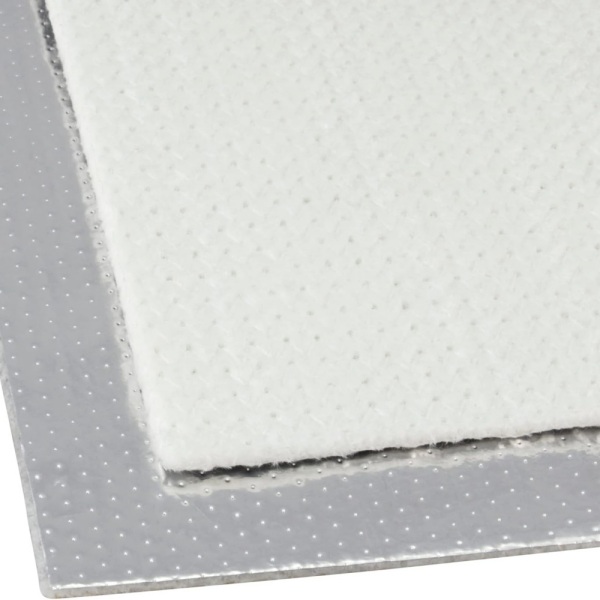
Heat barrier materials can be purchased in several forms depending on the customer's production process.
| Supply format | Typical purchasing reason |
|---|---|
| Standard sheet | Useful for prototype work, repair, distribution or low-volume in-house trimming. |
| Roll material | Useful where the customer cuts repeated blanks or needs longer continuous lengths. |
| Cut-to-size panel | Reduces trimming during assembly while keeping a simple rectangular or defined outline. |
| Die-cut part | Provides repeatable holes, slots and outer geometry for OEM assembly. |
| Adhesive-backed finished part | Combines the cut profile with a specified bonding layer for repeat installation. |
BSTFLEX can review finished shapes through its custom die-cut heat reflective mat program. For detailed drawing requirements, see Custom Die-Cut Heat Shields: Drawings, Tolerances and OEM Supply.
Use the same application and acceptance criteria for each candidate.
1. Confirm the construction. Record facing, substrate, thickness, adhesive and finished dimensions.
2. Fit the material. Check whether the sheet or mat follows the panel without creating unacceptable wrinkles, compression or contact with surrounding components.
3. Use the intended mounting method. Do not compare an adhesive-backed sheet loosely placed on a panel with a mechanically retained mat.
4. Measure the protected surface. Define the target temperature at a repeatable location rather than comparing only the temperature of the exposed reflective face.
5. Inspect after the complete thermal cycle. Check facing condition, edges, attachment and laminate integrity after the agreed operating and heat-soak exposure.
6. Review assembly time. Record trimming, liner removal, alignment and fastening work. A material with similar thermal performance may still provide a manufacturing advantage if it reduces repeat assembly steps.
A heat shield product may list several temperature-related values, but those figures can refer to different test conditions or different layers.
Before comparing two candidates, ask:
Two materials cannot be ranked from temperature numbers alone if those numbers describe different conditions.
| Application requirement | Format to evaluate first | Key check |
|---|---|---|
| Thin localized radiant barrier on a smooth panel | Reflective heat shield sheet | Facing orientation, adhesive temperature and surface preparation. |
| Flexible barrier with fiberglass thermal layer | Fiberglass heat shield mat | Installed thickness, clearance and complete laminate specification. |
| Project specifying silica textile substrate | Silica thermal barrier mat | Substrate, facing, attachment and actual operating conditions. |
| Repeat OEM part with holes and cutouts | Sheet or mat converted into a die-cut part | Drawing, tolerances, material orientation and sample approval. |
| Exposed underbody installation | Application-specific barrier or supported shield | Road exposure, attachment, edge durability and exhaust clearance. |
A useful heat shield sheet or mat inquiry should include:
For larger OEM programs, BSTFLEX can review the project through its heat barrier material manufacturing and OEM supply service.
No. Product names are not standardized enough to use the word mat or sheet as a thickness specification. Always request the actual finished thickness and construction.
Neither format is universally better. A reflective sheet may suit a low-profile radiant barrier, while a mat may add a defined fibrous thermal layer. Compare both against the same installed temperature, clearance and durability requirements.
Many flexible sheet constructions can be reviewed for custom cutting or die cutting. Feature size, material thickness, backing and edge requirements affect feasibility. Approve the finished part using the selected material rather than assuming every sheet cuts identically.
Do not assume a panel-protection mat is suitable for direct exhaust contact. Direct exhaust insulation requires a material and attachment method specifically approved for that exposure. The panel barriers discussed here are intended to protect a nearby surface unless otherwise specified.
Sheets are useful for prototypes, distribution and in-house conversion. Finished die-cut parts can improve repeatability when the same geometry is installed in production. Compare material utilization, conversion labor, inspection and assembly requirements rather than sheet price alone.
The distinction between a heat shield sheet and a heat shield mat is useful only when it leads to a clearer specification. Define the facing, substrate, thickness, backing, attachment and supply format first. Then evaluate the complete material in the intended installation.
BSTFLEX supplies reflective heat barrier sheets and thermal barrier mats, including fiberglass, silica, gold reflective and adhesive-backed constructions. Custom sizes and converted parts can be reviewed for OEM and industrial projects.
Send your heat shield sheet or mat requirements to BSTFLEX with the application, dimensions, temperature conditions and required quantity for material selection and quotation.

No.10, Chuangxin North Road, Nanshan Park, Ningguo Economic and Technological Development Zone, Ningguo City, Anhui Province, China
tél/Whatsapp : 0086-15856303740
e-mail : sales@bstbraidedsleeve.com
Skype : vanesa-cheng