A diesel heater exhaust silencer should be selected for noise reduction, acceptable exhaust resistance and suitability for its installation location. A matching pipe diameter answers only the connection question. It does not establish that the muffler is appropriate for a boat compartment, that the heater will tolerate the complete exhaust route, or that a claimed noise reduction applies to your installation.
The main purchasing choice is between a separate inline muffler and an exhaust pipe with an integrated silencer. Compare the finished arrangements, including joints, drainage, insulation and service access, before choosing the component.
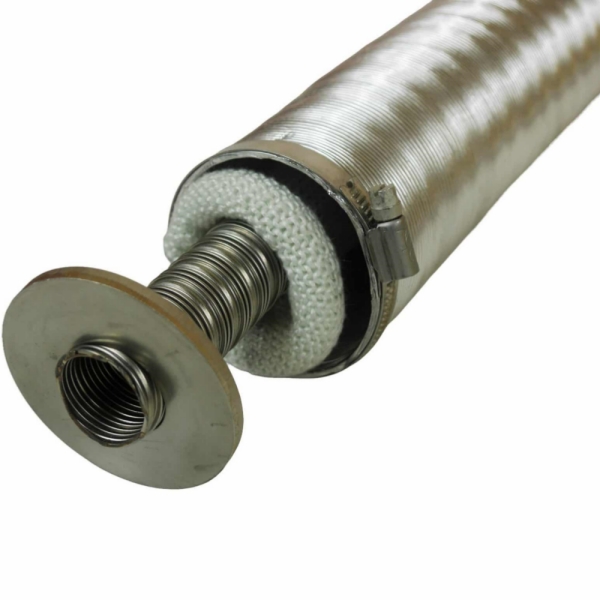
Identify the Noise Path Before Ordering a Muffler
An exhaust silencer acts on sound travelling through the combustion exhaust. A combustion-air silencer works on the inlet side. Neither should be treated as a general solution for every sound coming from the heater installation.
Distinguish exhaust discharge noise from combustion-air intake noise and sound transmitted through mounting points. Have the installer identify the relevant source before changing the exhaust arrangement. Do not obstruct either air path to see whether the heater becomes quieter.
Where the identified source is the combustion-air inlet, review the separate combustion air silencer. An intake-side component is not a substitute for a diesel heater exhaust muffler.
Separate Inline Silencer or Integrated Exhaust Pipe?
A separate inline silencer is connected between exhaust sections. An integrated design incorporates the silencing section into a supplied exhaust assembly. The distinction concerns packaging and interfaces; it does not establish which arrangement is quieter.
| Decision point | Separate inline muffler | Integrated exhaust assembly |
|---|---|---|
| Connection layout | Identify the silencer inlet, outlet and adjoining pipe joints individually. | Identify the supplied assembly ends and any connections remaining outside it. |
| Available space | Allow room for the body, connection engagement and its approved supports. | Check the complete assembly envelope, including the silencing section and outer protection. |
| Replacement planning | Establish whether the silencer can be replaced separately using the approved parts. | Establish which assembly must be replaced and whether connections remain accessible. |
| Thermal protection | Specify the required protection for both pipe and silencer, not the pipe alone. | Confirm which sections have insulation and where exposed metal remains. |
| Evidence required | Check the selected muffler in the completed exhaust route. | Check the selected assembly in the completed exhaust route. |
Integration can remove the need for a separately positioned canister, depending on the design. It does not remove the need to verify the remaining connections or to provide access for inspection.
A Matching Connection Size Is Only the First Check
Record the mating dimensions at the heater, silencer and final outlet. Clarify whether a dimension describes the pipe bore, connection outside diameter or nominal designation. Use a connection drawing rather than relying on a photograph or a shared size label.
The existing diesel heater exhaust hose diameter and connection guide addresses that dimensional check. For silencer selection, take the review further: confirm the gas path, approved joint design and permitted exhaust-system configuration.
A component can fit physically without being suitable for the operating conditions. Do not solve an incompatible joint by overtightening a clamp or concealing the connection beneath lagging.
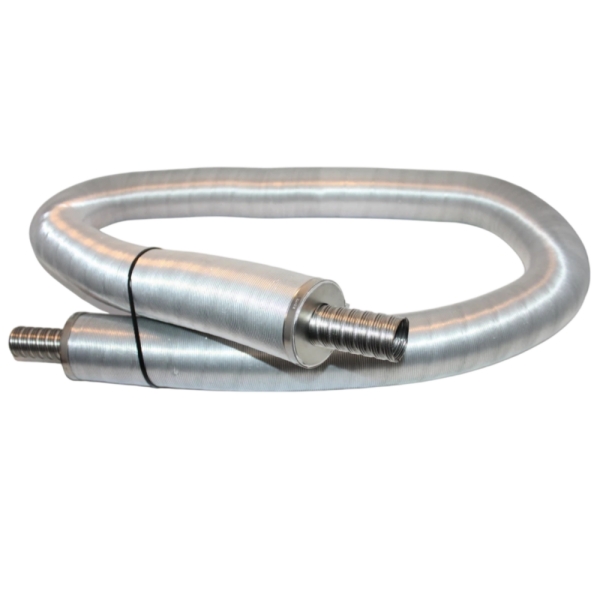
Review Backpressure Across the Complete Exhaust Route
The heater must discharge through the pipe, bends, silencer and outlet arrangement. Exhaust restriction therefore needs to be assessed for the complete system. A favorable statement about one component does not establish the resistance of the installed route.
Use the exact heater manufacturer's approved layout, length restrictions or backpressure criteria. Where calculation or measurement is required, agree the method with the responsible installer or system engineer. Do not transfer a limit from cabin warm-air ducting or from a different heater model.
A proposal to add a second silencer is a system change, not an automatic noise upgrade. Record the revised layout and obtain approval before adding parts. A longer pipe or a more restrictive passage is not a substitute for a properly selected acoustic component.
The useful purchasing target is lower exhaust noise within the heater's permitted operating conditions. A proposal that meets a sound target but exceeds the allowed exhaust restriction is not an acceptable substitute.
Marine Use Requires More Than a Stainless Steel Finish
A silencer intended for external vehicle mounting may have a different seam or condensate-drain arrangement from one intended for an enclosed marine installation. Do not assume that a stainless steel housing, an insulation cover or a matching diameter makes the two interchangeable.
For a marine heater exhaust silencer, confirm the gas-tight construction and joints required at the proposed location. Exhaust leakage must not reach accommodation spaces or be drawn into the heater's circulating-air inlet. A locker is not automatically an external mounting location.
This discussion concerns dry exhaust from a cabin heater. It is not a specification for a propulsion-engine wet exhaust system. The complete heater installation needs professional review, suitable ventilation and a maintained carbon monoxide alarm appropriate to the installation; an alarm does not replace a sound exhaust system.
Condensate drainage must match the approved configuration
Ask how condensate is managed in the exact assembly and mounting orientation. Do not copy a drain-hole instruction from an exterior vehicle layout into a boat compartment. Equally, do not block an existing drain or modify seams to convert an unsuitable muffler into a marine component.
Any drainage provision must follow the instructions for the heater and the selected exhaust assembly. Document it on the installation drawing so that insulation, brackets or later alterations do not interfere with its intended operation.
What Should a Noise-Reduction Figure Tell You?
A statement such as “quiet operation” is not a measurable purchase criterion. A decibel reduction also needs a reference: the operating heater, exhaust configuration, measurement position and test conditions. An exhaust-outlet result should not be presented as the same reduction inside a cabin.
For an OEM comparison, agree a representative acoustic check before evaluating samples. Record the heater operating state, instrument settings, microphone position, background conditions and the baseline configuration. Repeat the agreed operating points rather than selecting only the quietest result. Where a particular tone matters, request suitable frequency information as well as an overall level.
Use a baseline permitted by the heater manufacturer. Do not remove a required silencer or other mandatory exhaust part simply to create a comparison. Treat acoustic testing, exhaust restriction and gas-tightness as separate acceptance checks; a pass in one does not prove a pass in the others.
Keep Gas Containment, Insulation and Supports Separate
The metal exhaust path and its specified joints contain the combustion gases. Thermal insulation serves a different purpose. It must not be relied upon to repair a leaking seam or an incorrectly fitted connection.
Specify the finished outside dimensions and clearances around the assembly. Insulation does not automatically make the exterior safe to touch or permit contact with wiring, fuel lines or interior trim. The heater's mounting and clearance requirements still apply.
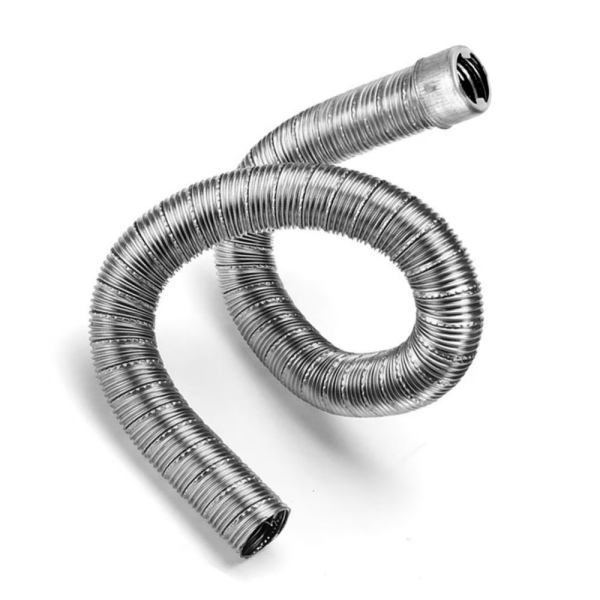
Where separate connecting pipe is needed, BSTFLEX lists flexible stainless steel diesel heater exhaust hose. Select it as a component of the approved route, not as permission to place flexible exhaust pipe anywhere inside a vehicle or vessel.
Mark support locations and service access on the drawing. Avoid allowing the silencer weight to load a connection that was not designed to support it. Confirm any cutting allowance before installation; do not assume an integrated silencing section can be shortened like plain pipe.
Specify an OEM Silenced-Exhaust Assembly as a Complete Part
A clear inquiry should let the supplier distinguish the requested assembly from a generic replacement muffler. The following fields form a proposed purchasing checklist; they are not published ratings or pre-existing approvals for a particular product.
| Specification field | Information to provide |
|---|---|
| Heater and location | Exact heater model and whether the assembly is externally mounted, in an equipment compartment or in a marine installation. |
| Connections and envelope | Inlet and outlet dimensions, connection type, overall route, orientation and available space. |
| Exhaust requirements | Applicable manufacturer restrictions, permitted components and any required pressure-loss assessment. |
| Acoustic objective | The noise location of concern, operating states and an agreed measurement method or documented target. |
| Containment and drainage | Required gas-tightness evidence, joint specification and the approved condensate-management arrangement. |
| Thermal protection | Required insulation, outer protection, exposure conditions and clearance envelope. |
| Approval and supply | Sample quantity, production quantity, drawing revision, required documents and packing requirements. |
Keep the approved construction identifiable. A change to the silencer internals, connection arrangement or insulation should be reviewed against the requirements it could affect, rather than accepted solely because the outside dimensions remain unchanged.
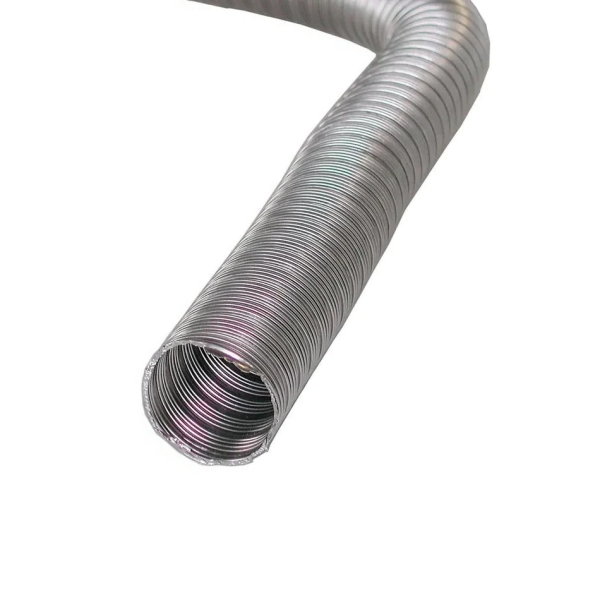
BSTFLEX Integrated Exhaust Option
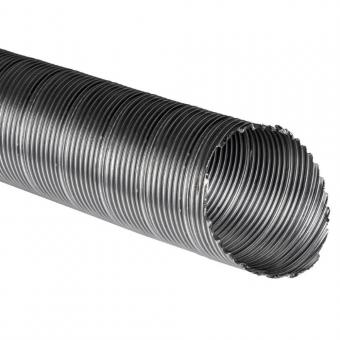
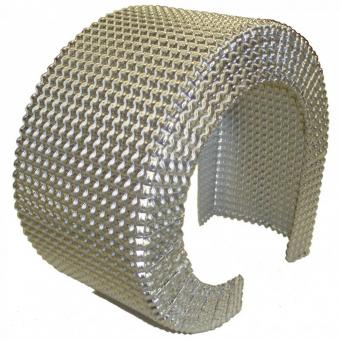
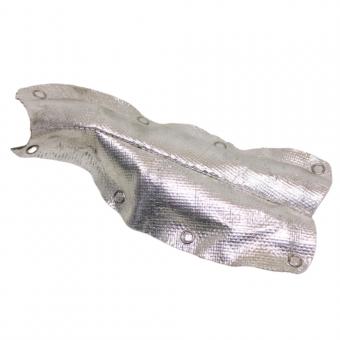
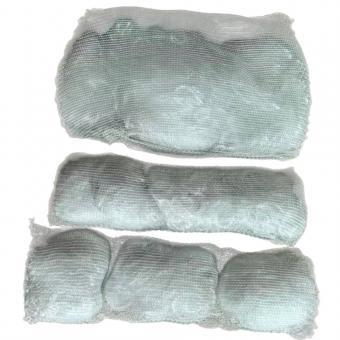
The BSTFLEX Marine Exhaust System with Integrated Silencer combines a stainless steel exhaust section with built-in silencing, heat-resistant insulation and multilayer aluminum protective tubing. The listed customization options include pipe dimensions, silencer configuration, insulation thickness and connection orientation.
For a project quotation, request confirmation of the exact supplied configuration and the technical evidence needed by the heater supplier or responsible engineer. Do not infer a measured sound reduction, pressure-loss limit or installation approval from the product name alone.
It belongs to the wider BSTFLEX heater ducting and heat protection tube range. Keep exhaust components separate from cabin-air ducts and combustion-air intake accessories in the bill of materials.
Request a Heater Exhaust Silencer Assembly
Send the heater identification, connection drawing, installation photographs and required route. State whether you are evaluating an integrated exhaust assembly or replacing an existing component, and include the noise objective, applicable exhaust limits, insulation requirements and order quantity.
For OEM sampling, identify the checks and documents required before production approval. A component quotation and approval of the complete heater installation are separate steps.
FAQ: Diesel Heater Exhaust Silencers
What is the difference between a diesel heater muffler and an exhaust silencer?
In this application, muffler and exhaust silencer usually name the same exhaust-side noise-control component. Neither term defines its gas-tightness, flow resistance or suitability for a particular installation.
Is an integrated exhaust silencer always quieter than a separate muffler?
No. Integration describes the assembly layout, not a guaranteed acoustic result. Compare documented noise measurements under equivalent operating conditions and confirm the permitted exhaust restriction.
Can I fit two exhaust silencers to make a diesel heater quieter?
Do not add a second silencer without approval for the exact heater and complete exhaust layout. Additional components change the system resistance, mounting arrangement and condensate management.
Can an external vehicle heater muffler be used inside a boat?
Do not assume it can. Confirm that the exact component, its joints and its drainage arrangement are suitable for the proposed marine location. A qualified installer must assess the complete exhaust system; matching diameter alone is insufficient.
What should I send for an integrated heater exhaust quotation?
Provide the heater model, inlet and outlet connection details, route drawing, installation location, required insulation, noise objective, applicable exhaust-system limits and order quantity. Include the evidence and sample checks needed for project approval.