que cherchez-vous?
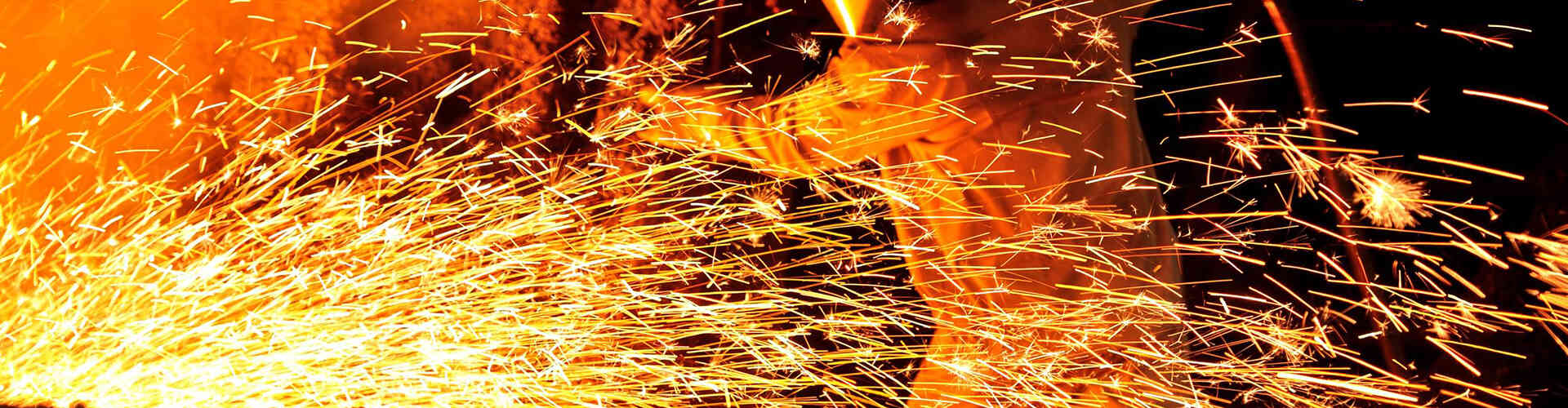
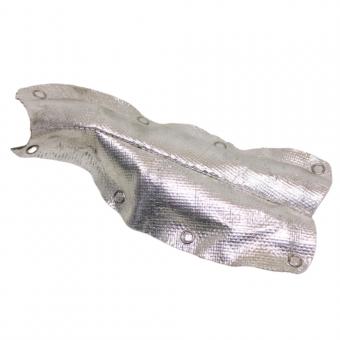
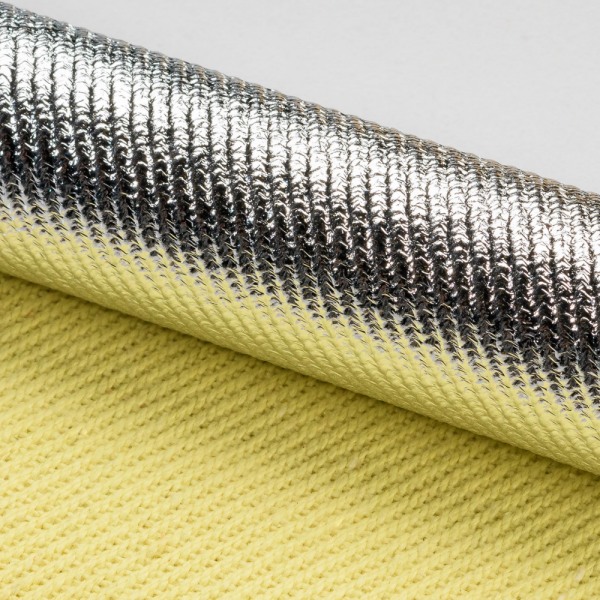
An aluminized aramid heat barrier combines an aluminized reflective facing with an aramid textile backing. The reason to evaluate aramid is not simply to obtain a larger temperature number. It is to combine radiant heat shielding with a backing selected for strength, handling and flexibility in the finished part.
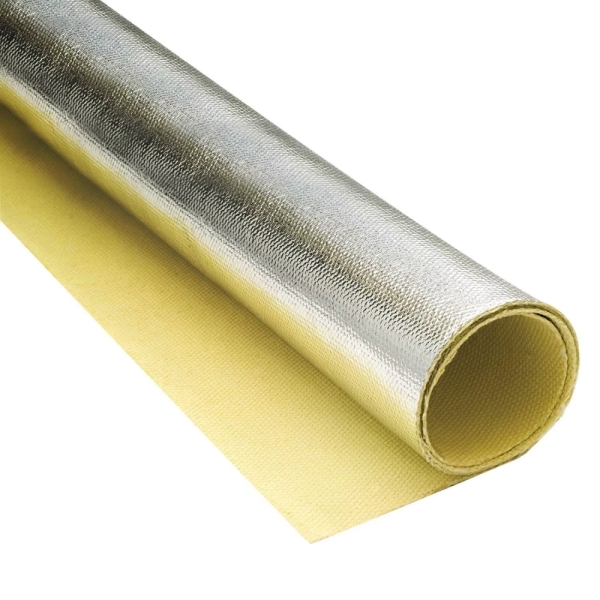
The BSTFLEX Heat Reflective Aluminized Aramid Heat Barrier uses an aramid-fabric backing beneath an aluminized face. For a panel that must be shaped, handled during assembly or supported around mounting points, the backing deserves as much attention as the reflective surface.
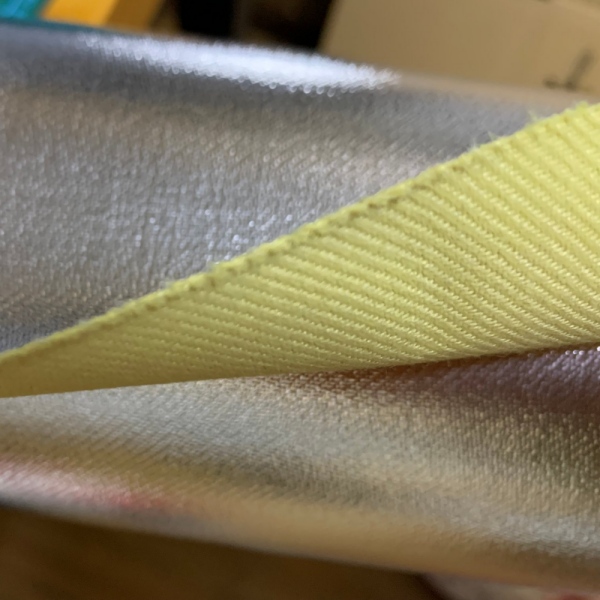
The reflective face and the fabric perform different jobs. The exposed reflective facing manages incident radiant heat. The textile supports that layer and influences how the material bends, carries local loads and survives handling. Specifying aramid changes the supporting fabric; it does not automatically change the reflectivity of the exposed face.
High strength relative to weight is one reason aramid fibers are used in demanding textile constructions. In a heat barrier, however, the finished fabric also depends on yarn size, weave, mass per unit area and finishing. Compare the supplied laminate rather than transferring a fiber manufacturer's strength figure directly to a sheet product.
Three properties should remain separate in the purchasing specification: tensile strength, resistance to tearing from an opening, and durability during repeated bending. A material that performs well in one measurement has not automatically passed the other two.
A shaped barrier is handled repeatedly during assembly. Consider an aramid-backed candidate when a part must be positioned around obstructions, removed during fit checks or manipulated before final attachment. Assess whether the backing and facing remain intact after the actual handling sequence.
A lightweight part has concentrated mounting loads. Where a drawing includes narrow sections or holes close to a coverage boundary, review backing strength together with the support detail. Aramid is a candidate for this evaluation, not permission to leave an unsupported tab or an overloaded hole in the design.
A mechanically retained liner will be removed for maintenance. Include the intended removal and refitting sequence in the material trial. A fabric that handles well when new still needs to retain its useful properties after thermal exposure. An adhesive-mounted version, where specified, requires a different service plan and should not be assumed reusable.
For a fixed panel with little handling after installation, keep fiberglass and silica constructions in the comparison. The aramid option should solve a measurable requirement rather than replace an accepted material solely because its fiber name sounds more advanced.
Before replacing an existing heat barrier, examine the failed or rejected sample. A stronger backing will not resolve every problem in an aluminized laminate.
| Observation on the sample | Check before changing the backing | How to evaluate an aramid candidate |
|---|---|---|
| The reflective face wears through while the fabric remains intact. | Identify rubbing, facing damage or an unsuitable exposed-surface construction. | Include facing durability in the trial. Backing strength alone will not demonstrate an improvement. |
| A mounting hole elongates or a narrow section tears. | Review hole position, edge distance, support area and the load applied during installation. | Compare complete parts with the proposed attachment, including their condition after thermal exposure. |
| The material bridges a contour instead of lying against its support. | Check laminate stiffness, thickness, weave direction and the cut pattern. | Trial the same contour in the candidate material. High tensile strength does not establish good conformity. |
| The protected panel remains too hot despite an intact shield. | Review heat paths, coverage, facing orientation, separation and insulating thickness. | Require a thermal comparison. A backing substitution by itself is not evidence of lower panel temperature. |
An aramid-versus-fiberglass heat shield comparison should begin with the actual mechanical and thermal requirements. Aramid-backed fabrics are worth assessing where repeated handling and flexing matter. A supported, largely stationary barrier presents a different selection problem.
The aluminized fiberglass heat shield mat provides a glass-fiber construction to include in a panel-barrier comparison. Specify the thickness, facing and attachment required for the same protected area. Do not compare a thin aramid laminate with a substantially thicker glass-fiber mat and attribute every difference to the fiber.
The aluminum silica thermal barrier mat provides a woven-silica alternative. Where the project calls for silica, review its complete construction and installation conditions rather than treating a substrate rating as the limit of every layer.
For each candidate, record finished thickness, mass per unit area, handling behavior and thermal acceptance. Select the construction that meets the combined requirement. Stronger fabric is not synonymous with higher continuous-temperature capability, and a different substrate is not a substitute for the insulating thickness the assembly needs.
A flexible backing does not make every facing equally tolerant of creasing. Inspect the complete laminate after forming it around the intended contour. Look for localized facing damage, separation between layers and changes around cutouts.
Use the bend shape and handling sequence expected in production. Repeatedly folding a sample sharply in half may not represent service, while laying it flat on a bench may miss the problem entirely. Define the relevant bend direction and radius on the sample-review plan.
Where the part is fitted around different contours, compare samples in the relevant fabric orientations. Establish an acceptable installed shape before fixing the cutting layout. This allows the material choice and pattern to be approved together without assuming that the fabric behaves identically in every direction.
A radiant-exposure rating, fabric temperature and adhesive-interface temperature describe different conditions. Ask which layer a figure refers to, whether the exposure is continuous or short-duration, and what separation and test arrangement were used.
For a reflective panel barrier, define the temperature limit at the protected location. That is the result the installation must achieve. The temperature of the nearby exhaust or heater is an input to the assessment, not a substitute for the temperature reached by the fabric, facing or bond.
Include the condition of the backing after the agreed thermal exposure. A part may remain in place yet no longer tolerate the handling or attachment load required for its next service cycle. Thermal acceptance and retained mechanical performance belong in the same sample review.
Do not infer pressure-sensitive adhesive backing from the term aluminized aramid heat barrier. State whether the project requires mechanical retention, a separately applied adhesive or a supplied adhesive-backed construction for review.
For mechanical retention, define how the fixing distributes load into the textile. A backing washer or support plate may be part of the proposed arrangement, but its dimensions and suitability need to match the part. Review local compression and the risk of pulling the laminate out of position.
For adhesive attachment, confirm the actual substrate, coating, temperature and installation procedure. Specify compatibility with the aramid-backed laminate as well as the receiving surface. Choosing a strong fabric does not resolve an unsuitable bond.
Instead of requesting the best heat shield material, explain why the existing candidate is insufficient. A useful brief might read:
We need a reflective liner for a removable equipment panel. The thermal target is defined, but the current sample is damaged during fitting around the mounting openings. Please propose an aramid-backed candidate for comparison at the stated installed thickness and with the same attachment layout.
This is an example purchasing brief, not a claim about a tested BSTFLEX installation. It identifies the reason for considering aramid and gives the supplier a basis for selecting the comparison sample.
Agree three acceptance points: the receiving panel must meet its thermal target; the finished laminate must remain intact through the required handling sequence; and the mounting areas must retain their function after the agreed exposure. Keep photographs and measurements of the same features before and after evaluation.
Identify the approved fabric construction, reflective facing, total thickness and mass per unit area. Add the required outline, heat-facing side, attachment arrangement and any critical fabric orientation. Where these details remain open, mark them as sample-development items rather than approved production specifications.
For shaped components, BSTFLEX can review the requirement through its custom die-cut heat reflective mat service. Cutting method, narrow features, edge requirements and packing are confirmed for the selected aramid construction. Do not assume a pattern approved in a different material can be transferred without a fit and handling check.
Sheet and converted-part requirements can also be discussed through our heat barrier material manufacturing and OEM supply services. Separate prototype quantity from repeat-order demand so the quotation covers the intended supply format.
The exposed reflective facing controls the direct interaction with incident radiation. Changing the backing alone does not establish higher reflectance. Compare the complete materials and their installed performance under matching conditions.
No. Mechanical strength and temperature capability are different properties. Evaluate the facing, fabric, interlayer bond and mounting system against the required exposure rather than ranking finished products by fiber name.
No. Aluminized describes the reflective surface, not the attachment system. Include the required backing or fixing arrangement in the inquiry and confirm the quoted construction before ordering.
Start with the BSTFLEX aluminized aramid heat barrier when the supporting fabric is part of the selection problem. For other substrates, compare the reflective heat barrier material range.
Send your aramid heat shield requirements to BSTFLEX with the installation layout, operating conditions, material constraints and quantity. Include the handling or mounting issue you need to solve so the material recommendation addresses the finished part.

No.10, Chuangxin North Road, Nanshan Park, Ningguo Economic and Technological Development Zone, Ningguo City, Anhui Province, China
tél/Whatsapp : 0086-15856303740
e-mail : sales@bstbraidedsleeve.com
Skype : vanesa-cheng